

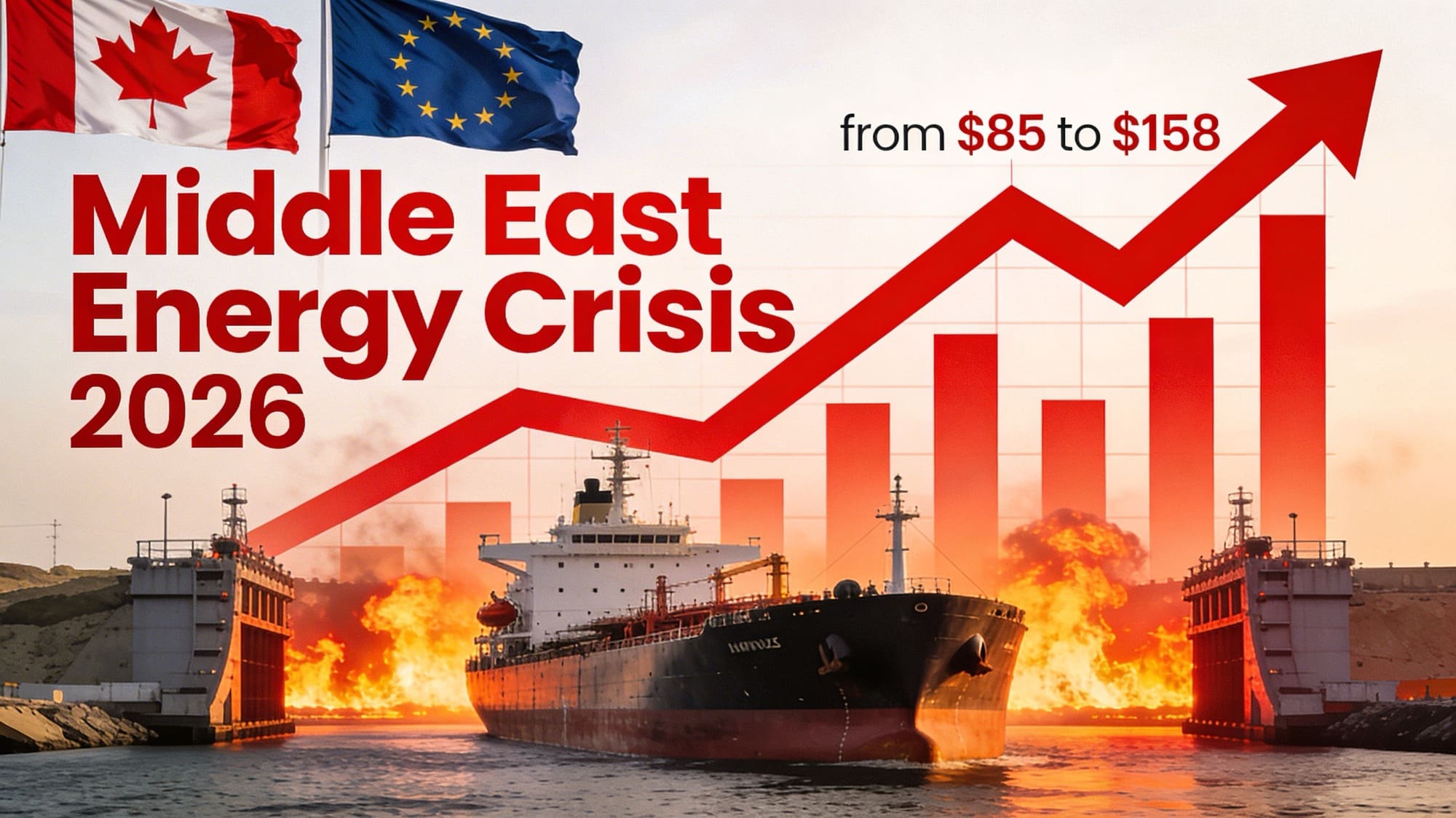
Canada and EU Mobilize Response to Middle East Energy Crisis
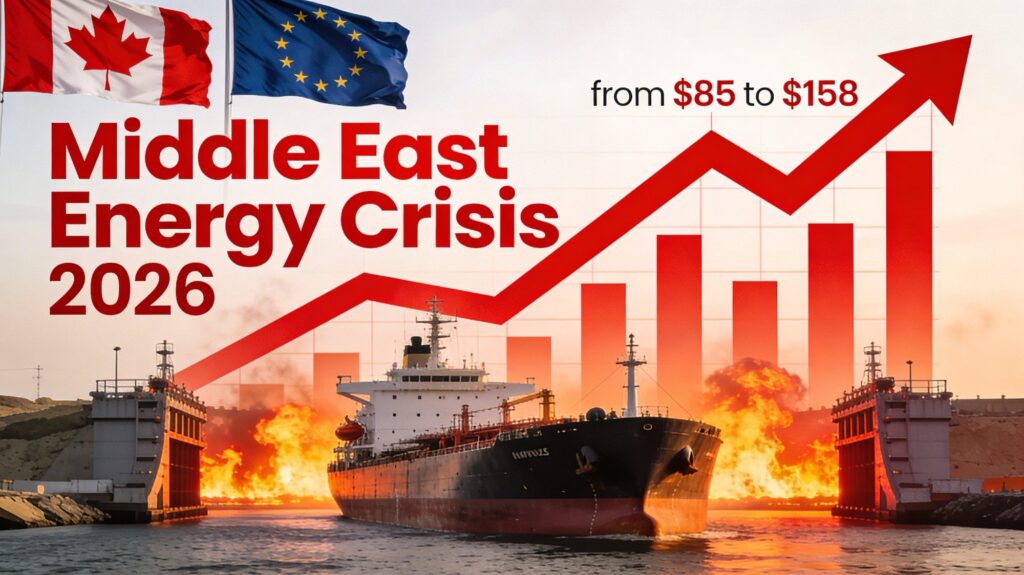
As the escalating conflict between the United States, Israel, and Iran enters its second week, global energy markets have been thrown into turmoil. With the Strait of Hormuz effectively closed and oil prices surging past $100 a barrel, Canada and the European Union are racing to stabilize supplies and shield their economies from what is shaping up to be the most severe energy shock in decades.
Canada Eyes Production Boost
The Canadian government has begun urgent consultations with provincial authorities and energy producers to explore options for increasing oil output. Officials acknowledged that while short-term flexibility exists within current production levels, the capacity to rapidly expand exports remains limited by infrastructure bottlenecks.
Efforts are now focused on maximizing shipments through the newly completed Trans Mountain Expansion pipeline, alongside exploring rail and marine transport alternatives to redirect volumes toward markets experiencing acute deficits. Federal representatives emphasized Canada’s role as a “trusted supplier” and its commitment to maintaining energy market stability through both traditional oil exports and renewable transition investments.
EU Activates Crisis Measures — but Gaps Remain
Across the Atlantic, the European Union has activated a series of emergency measures designed to manage the unfolding crisis. Evacuation and repatriation missions have been launched for EU citizens in affected areas, while enhanced naval surveillance has been deployed to protect maritime traffic in strategic chokepoints.
Member states have also begun coordinating their strategic oil reserves to cushion supply disruptions, though officials have yet to authorize a collective release of stocks. Despite these steps, analysts warn that Europe’s heavy dependency on energy imports and fragmented national reserve systems could limit the bloc’s ability to react swiftly should the situation deteriorate further.
A Crisis Without a Quick Fix
The crisis originated when U.S. and Israeli military strikes targeted Iran’s leadership, prompting a barrage of retaliatory attacks that brought regional shipping routes to a standstill. Oil tanker movements through the Strait of Hormuz — normally accounting for nearly one-fifth of global crude supply — have nearly ceased, forcing consuming nations to scramble for alternative sources.
Despite efforts to coordinate a multinational naval mission to restore passage, diplomats concede that reopening the strait may take weeks. In the meantime, governments are turning inward to manage inflationary pressures and ensure domestic fuel security. Energy experts caution that, absent immediate de-escalation and logistical breakthroughs, the world should prepare for a prolonged period of volatility — one without a quick fix.
 Follow Us On WhatsApp
































Leave a Comment