
Midway through The Devil Wears Prada 2, there’s a moment that feels almost unthinkable for longtime fans of the franchise. Meryl Streep’s Miranda Priestly — the commanding force behind Runway magazine — finds herself being lectured, something she would never have tolerated in the original film directed by David Frankel two decades ago.
To be fair, things aren’t exactly going smoothly this time around. Throughout the film, which hits theatres this Friday, there’s a constant reminder of how much the world has changed — journalism is fading, audiences no longer care about tastemakers, and the golden era of Runway seems to be slipping away.
That reality is bluntly spelled out by billionaire tech entrepreneur Benji Barnes (Justin Theroux), a stereotypical Silicon Valley figure who even avoids drinking water to maintain what he calls an “aqua deficit.” He represents a future where Runway might no longer need writers, models, or even people — everything could be churned out by AI. He goes so far as to compare this shift to the destruction of Pompeii, painting a dramatic and unsettling picture.
“One day it’s going to come and it’s going to smother us all,” he says to an unusually subdued Priestly. “Maybe that’s the way it has to be.”
If that sounds like a sharp departure from the glamour and escapism of the 2006 original — with its Paris trips and unforgettable fashion moments — the film still tries to maintain that surface-level charm. At its core, it remains a light, enjoyable story set in the world of high fashion, even if it lacks the sharp focus and iconic punch of its predecessor.
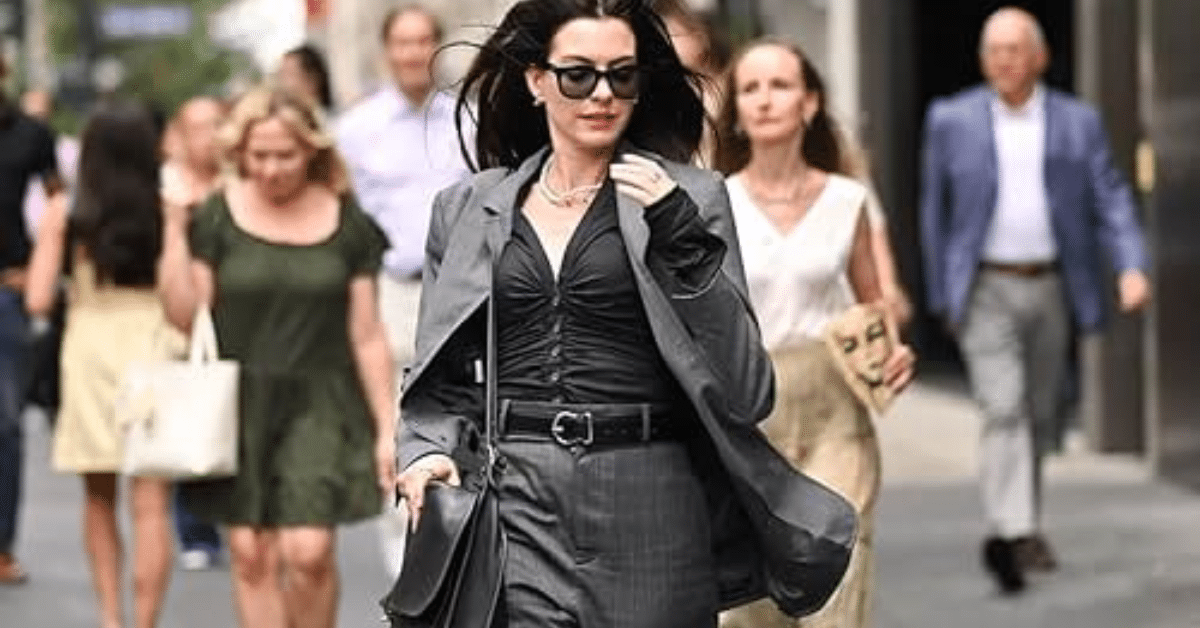
Anne Hathaway returns as Andy Sachs, though she’s no longer the naïve newcomer. Now an established journalist, she finds herself in a familiar predicament — receiving an award while simultaneously being fired from the New York Vanguard due to corporate cuts. With few options, she reluctantly makes her way back to Runway, once again taking on a role beneath her ambitions.
Stanley Tucci’s Nigel is back too, still delivering his signature wit. But even he reflects on how times have changed, reminiscing about the days of lavish, month-long work trips. Now, with the magazine operating mostly online, those have been reduced to quick, content-driven visits that audiences barely notice.
Emily Blunt’s Emily stands out the most in this sequel. No longer Miranda’s assistant, she’s climbed the ranks to become a Dior executive — and now, interestingly, seems to have the upper hand over her former boss. When Andy, now Runway’s features editor, questions the ethics of running a heavily branded advertorial, Emily doesn’t hold back. She reminds her that without advertisers, Runway simply wouldn’t exist, dismissing Andy’s concerns about journalistic integrity with biting sarcasm.
Meanwhile, Miranda is dealing with the fallout of a major scandal. An exposé has damaged Runway’s reputation after revealing that the magazine once praised a company linked to sweatshop-driven fast fashion. In response, Miranda’s boss Irv Ravitz (Tibor Feldman) and his son Jay (B.J. Novak) bring Andy back in, hoping her reputation for serious journalism can help repair the damage.
The film leans heavily on nostalgia, offering plenty of callbacks for fans — from floral fashion moments to subtle references to iconic scenes and even nods to the real-life inspiration behind Miranda’s character. These touches add a layer of familiarity, even if they sometimes feel more like fan service than meaningful storytelling.
When it comes to recapturing the magic of the original, the sequel has mixed success. It often does so by undoing earlier character growth. Andy, instead of moving forward, slips back into old patterns — seeking validation, scrambling to meet impossible demands, and once again questioning her place in fashion versus “real” journalism.
Miranda, too, feels less layered this time. While Meryl Streep still delivers a compelling performance, the character lacks the depth and subtle vulnerability that made her so memorable before. Instead of gradually revealing the pressures beneath her icy exterior, the film presents her as a diminished version of her former self.
There are broader issues as well. The film spends less time celebrating fashion and more time circling around themes of capitalism, digital disruption, and the decline of traditional media — though these ideas are never fully explored. Ironically, many of the characters navigating these struggles are themselves extremely wealthy, which blunts the impact of the narrative.
Even so, the film isn’t without its strengths. The drama is engaging, the fashion remains striking, and there’s an undeniable comfort in revisiting these characters. But by sidelining the emotional depth and cultural commentary that made the original stand out, The Devil Wears Prada 2 struggles to leave a lasting impression.
Beneath the glossy visuals and star-studded appearances, the story feels thin and scattered — as if it’s constantly searching for direction. At times, it resembles a high-budget, feel-good TV episode more than a fully realized cinematic sequel, making it difficult to separate its polished charm from something like an especially well-made episode of The Suite Life of Zack & Cody.

Harnaik Singh Rathor is the Founder, Publisher, and Editor-in-Chief of StudioX News Canada, Canada's multilingual digital news network serving diaspora communities across 44 languages. With a background in media production, public relations, and multicultural communications, he founded StudioX Film and TV Corporation to bridge the gap between mainstream Canadian media and the country's diverse immigrant communities. He is a member of the Canadian Association of Journalists (CAJ), RTDNA Canada, CPRS Vancouver, NEPMCC, and the Canadian Freelance Union (Unifor). Based in Surrey, British Columbia. | LinkedIn: https://www.linkedin.com/in/harnaiksinghrathor/ | Muck Rack: https://muckrack.com/harnaiksinghrathor | Email: editor@studioxnews.ca