
“The Devil Wears Prada 2” commits a mistake that any glossy-magazine profile writer would instantly recognize. It becomes too enamored with its subject, delivering not a sharp, engaging portrait but something closer to a flattering puff piece.
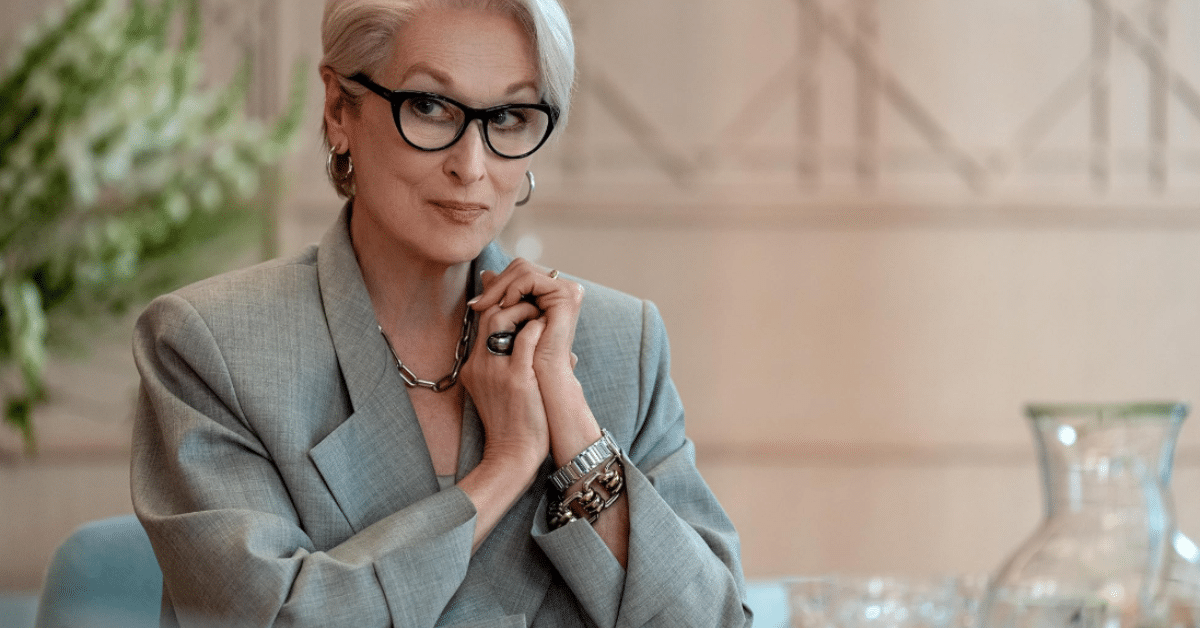
In the original 2006 film, Miranda Priestly ruled her world with icy authority and unshakable composure. While it makes sense that her influence in publishing has waned two decades later, her response to that decline feels oddly soft. Instead of the formidable figure audiences remember, she now comes across as almost warm and approachable. In trying too hard to please fans, the sequel seems to lose both its narrative edge and the essence of who Miranda once was.
Meryl Streep steps back into the role with familiar poise at first. Meanwhile, Andy (Anne Hathaway), now a seasoned investigative journalist far removed from her assistant days, is drawn back into Runway as head of features, bringing her face-to-face with Miranda again. Initially, Miranda reacts with her usual dismissiveness, barely acknowledging Andy before offering a few sharp remarks.
But from there, things start to unravel. The film seems intent on revisiting and reworking elements from the original, often in ways that feel forced. References like the “Spring Florals” theme at a faux-Met Gala or Andy’s signature blue sweater vest feel more like nostalgia plays than meaningful callbacks. Miranda herself is reimagined through a more vulnerable lens, echoing her brief moment of emotional openness from the first film. This time, however, her struggles in a failing industry are exaggerated to the point of feeling almost absurd. Scenes like her awkwardly hanging up her own coat, rather than tossing it to an assistant, feel out of place—more like a parody than a continuation of her character.
One particularly jarring moment comes when Miranda is forced to fly coach to Milan Fashion Week due to budget cuts, ending up in a middle seat. Instead of a powerful figure out of her element, she appears confused and diminished, stripped of the commanding presence that once made her so compelling. Even Streep’s delivery feels different, as though the character’s signature voice and confidence have been muted. The attempt to humanize Miranda seems to have come at the cost of what made her iconic.
A telling detail comes from real-life Vogue editor Anna Wintour, who reportedly reviewed the script and later said, “She called me back and said, ‘Anna, I think it’s going to be all right.’” While Wintour may not have embraced the original film, which was widely seen as a sharp, fictionalized critique, she eventually leaned into its cultural impact. Over time, her association with the story softened its edge, making it harder for the sequel to portray Miranda as anything truly harsh or intimidating.
To its credit, the sequel does capture some of the real challenges facing magazine editors in a changing industry. There are even moments that feel grounded in genuine media-world insight, with appearances from figures like Tina Brown and Jia Tolentino adding authenticity. Miranda’s struggles reflect broader, existential questions about relevance and longevity—issues that Wintour herself has faced, as seen in “The September Issue.”
Still, the film ultimately weakens Miranda by bringing her too close to the audience. In the original, part of her allure was her distance—she was powerful, mysterious, almost untouchable. Here, that mystique fades. Scenes set in her Hamptons home, meant to show a more personal side, instead feel oddly mismatched with the character. The grounded, cozy tone may suit other roles Streep has played, but it clashes with Miranda’s larger-than-life persona.
Interestingly, much of the film’s antagonistic energy is redirected toward Emily (Emily Blunt), who has undergone a dramatic personality shift. Now working at Dior, she schemes to take over Runway with the backing of her billionaire partner. Her ambition peaks with the plan to feature herself on the magazine’s cover—a move meant to signal her unworthiness. Ironically, it mirrors real-world editorial power moves.
In the end, while the film stops short of fully dismantling Miranda, it brings her down to earth in a way that drains her of her defining power. What was once electrifying—her distance, her authority, her mystery—is replaced with familiarity. And in doing so, the sequel loses the very spark that made the original unforgettable.

Harnaik Singh Rathor is the Founder, Publisher, and Editor-in-Chief of StudioX News Canada, Canada's multilingual digital news network serving diaspora communities across 44 languages. With a background in media production, public relations, and multicultural communications, he founded StudioX Film and TV Corporation to bridge the gap between mainstream Canadian media and the country's diverse immigrant communities. He is a member of the Canadian Association of Journalists (CAJ), RTDNA Canada, CPRS Vancouver, NEPMCC, and the Canadian Freelance Union (Unifor). Based in Surrey, British Columbia. | LinkedIn: https://www.linkedin.com/in/harnaiksinghrathor/ | Muck Rack: https://muckrack.com/harnaiksinghrathor | Email: editor@studioxnews.ca