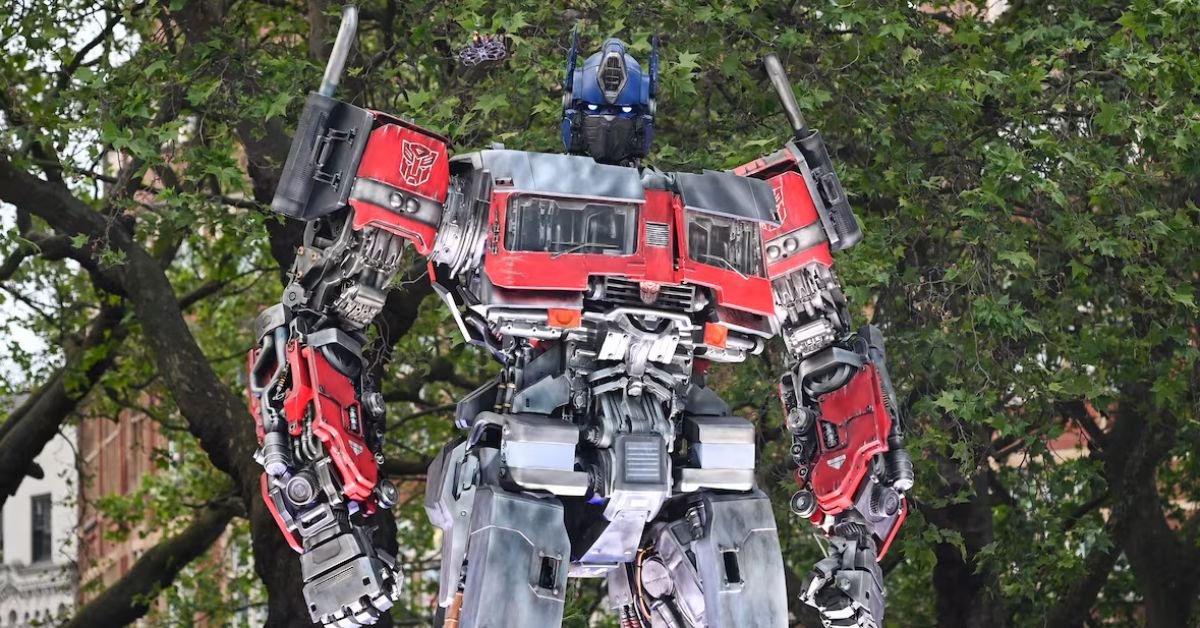

Optimus Prime and Megatron are taking on a new form beyond their traditional roles as Transformers. Hasbro, the American toy and entertainment company behind iconic franchises such as Transformers, Power Rangers, G.I. Joe, Monopoly, and Magic: The Gathering, has unveiled AI-powered versions of 12 of its most recognizable characters.
The move is designed to bring beloved characters into interactive digital experiences, but experts say it also raises important questions about children’s relationships with AI, advertising, and privacy.
Among the characters receiving AI adaptations are Transformers leaders Optimus Prime and Megatron, G.I. Joe villain Cobra Commander, Mr. Potato Head, and several familiar personalities from the classic mystery board game Clue, including Miss Scarlett, Col. Mustard, Mayor Green, Chef White, Solicitor Peacock, and Professor Plum.
According to Hasbro, these AI-powered characters are currently available for licensed use in “experiences and enterprise use cases.” In practice, that means consumers could soon encounter their favorite characters in interactive customer service experiences, branded activations, games, or even phone support systems while waiting on hold.
The company says the initiative is partly a response to the growing number of unofficial AI versions of popular characters already circulating online. As Hasbro noted, “millions of consumers are already encountering unauthorized versions of popular characters across chat, voice, gaming, and content creation platforms.”
To power the project, Hasbro has created Sixth Wall, an in-house AI studio focused on producing animated AI versions of its intellectual properties. The company is also collaborating with ElevenLabs, a firm specializing in human-AI interaction technologies.
Alongside the announcement, Hasbro introduced what it calls “behavioural licensing,” a new form of intellectual property protection that governs how characters think, speak, and behave in AI environments. This system will be managed through CharacterOS, a platform designed to maintain what the company describes as “safety guardrails.”
As a result, users hoping to ask controversial or politically charged questions may find the characters unwilling to engage. For example, Megatron is unlikely to offer much insight into global conflicts if prompted during an interaction.
Hasbro CEO Chris Cocks described the initiative as a way to expand storytelling opportunities while maintaining control over character authenticity.
“It opens new surfaces for play and storytelling” and addresses the issue of unauthorized use. “It gives brands a trusted way to bring characters into new AI-enabled platforms without losing what makes them authentic.”
The company emphasized that its current focus is on users aged 13 and older.
“The company is not currently developing AI products targeted at young children and is actively contributing to broader industry discussions around safety standards and voluntary guardrails for AI-enabled play experiences,” the release said.
To preserve the essence of the characters, Hasbro says the AI versions are built using authorized source material and feature voices recorded by human performers rather than AI-generated voices.
“I know Megatron pretty well, and I would love to go in and ask him a few questions,” Frank Welker, the longtime voice actor behind Megatron, said in a promotional video released alongside the announcement.
While the concept may excite fans, some experts remain cautious about its broader implications.
Matthew Johnson, Director of Education at MediaSmarts, a digital media literacy organization, says the technology is likely to appeal to children regardless of the company’s age-targeting intentions.
“We’ve known for decades that everybody, but in particular young children, treat anything that behaves in any way as human, as though it is human — as though it has agency, as though it has an identity,” he said.
Johnson believes this creates concerns about parasocial relationships, where children may form emotional attachments to AI-powered characters. He also worries that such interactions could blur the line between entertainment and marketing.
Children often struggle to recognize advertising, he noted, and companies have long sought to build brand loyalty early in life.
“There’s early evidence that shows that advertising in AI is extremely persuasive,” he said.
Privacy presents another challenge. Johnson argues that AI interactions could potentially gather valuable consumer insights through seemingly casual conversations. Characters might ask users for opinions on future movie remakes, product updates, or brand preferences, collecting information that companies would traditionally spend significant amounts of money to obtain.
“These are the kinds of things that these companies typically pay hundreds of thousands or millions of dollars to find out.”
Steve DiPaola, a professor and researcher at Simon Fraser University who has incorporated AI assistants into his classroom work, sees Hasbro’s move as part of a larger industry trend toward interactive fan experiences.
“There is this general notion of fans [that] want to have more personal experiences, these interactive experiences, and how do you do that?” he said.
“This isn’t any different than what a lot of celebrity agencies are thinking about, too.”
However, DiPaola questions the company’s attempt to formally define how fictional characters think and behave.
“There is no Optimus Prime — Optimus Prime is an idea by creatives that was used in different situations and then put together,” DiPaola said.
“So the notion that somehow they’re bringing him to life, I think, is a bit much.”
He also believes that commercializing interactive versions of beloved characters could alter how fans perceive them over time.
“Optimus Prime doesn’t sell stuff, so, already, they are not holding to the mandate of somehow, they will be stewards of Optimus Prime and all their characters,” he said.
For fans, DiPaola sees both excitement and risk in the technology’s future.
“[The] positive is ‘Oh my god,’ I get to talk with Optimus Prime!’ And the negative is, ‘Oh my god, he’s not who I thought he was, and he keeps trying to sell me hats.'”

Harnaik Singh Rathor is the Founder, Publisher, and Editor-in-Chief of StudioX News Canada, Canada's multilingual digital news network serving diaspora communities across 44 languages. With a background in media production, public relations, and multicultural communications, he founded StudioX Film and TV Corporation to bridge the gap between mainstream Canadian media and the country's diverse immigrant communities. He is a member of the Canadian Association of Journalists (CAJ), RTDNA Canada, CPRS Vancouver, NEPMCC, and the Canadian Freelance Union (Unifor). Based in Surrey, British Columbia. | LinkedIn: https://www.linkedin.com/in/harnaiksinghrathor/ | Muck Rack: https://muckrack.com/harnaiksinghrathor | Email: editor@studioxnews.ca