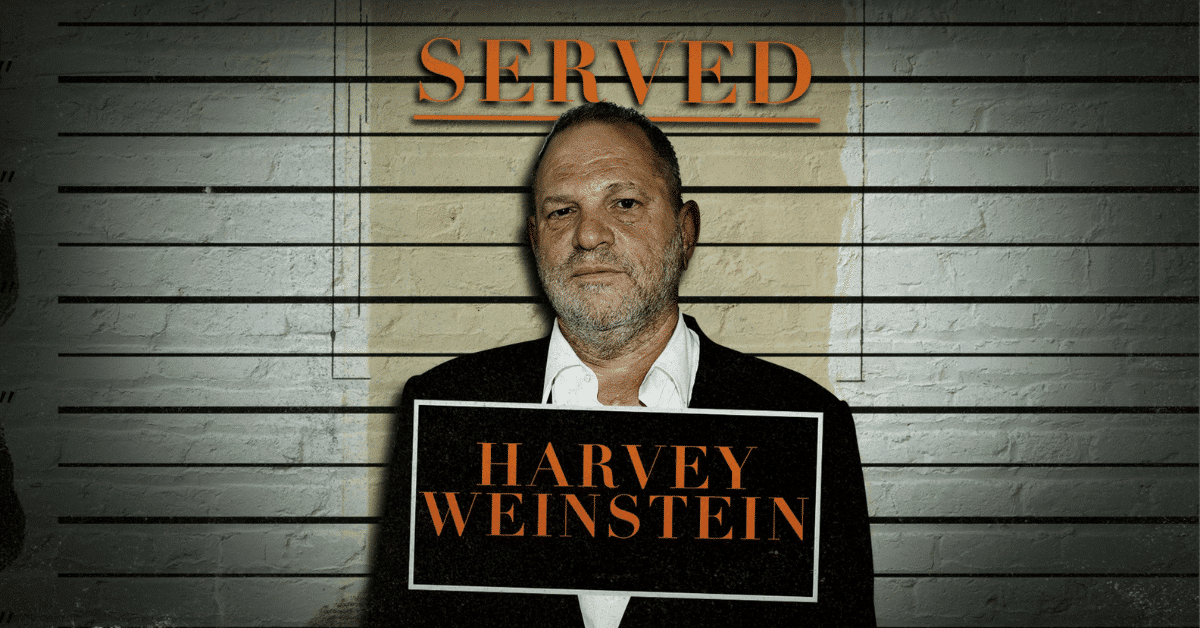

Harvey Weinstein’s rape retrial ended in a mistrial on Friday after jurors failed to reach a unanimous decision in the high-profile #MeToo-era case. The outcome follows another unsuccessful attempt last year, when a separate jury was also unable to deliver a verdict.
Although the former Hollywood producer has already been convicted of other sex crimes in both New York and California and remains in prison, the unresolved rape charge in New York now remains uncertain after three separate trials.
Weinstein showed no visible reaction as court officers escorted him out of the courtroom in a wheelchair.
The mostly male jury in Manhattan had been considering whether Weinstein raped Jessica Mann, a hairstylist and aspiring actor. His legal team maintained that the encounter was consensual and stemmed from a complicated relationship between Weinstein, who was married at the time, and Mann, who was decades younger.
Tensions within the jury became apparent a few hours into the third day of deliberations on Friday. Jurors sent a note to the judge stating they “have concluded that they cannot reach” a unanimous verdict. Judge Curtis Farber instructed them to continue discussions, which is standard procedure in New York when jurors first report being deadlocked.
After more than an hour of additional deliberations behind closed doors, the jury sent another note repeating the same concern and adding, “We feel that no one is going to change where they stand.”
Juror Josh Hadar later told reporters that nine jurors supported acquittal, while three believed Weinstein should be convicted.
Defence lawyer Marc Agnifilo described the outcome as “a great day for our jury system.”
A hearing has been scheduled for June 24 to determine whether prosecutors will pursue a fourth trial. Manhattan District Attorney Alvin Bragg expressed disappointment with the mistrial but said, “we deeply respect the jury system.”
Bragg stated that prosecutors would consult with Mann before deciding on another trial and would also consider the outcome of Weinstein’s sentencing in a separate case. Mann was not present in court when the mistrial was announced.
Before the allegations against him surfaced publicly in 2017, Weinstein was one of Hollywood’s most influential film producers and a major Democratic donor. The wave of sexual harassment and assault accusations against him became a defining moment for the #MeToo movement, which pushed for greater accountability in cases of sexual misconduct.
The scandal transformed Weinstein from a powerful industry figure into a social outcast, led to the collapse of his film studio, and resulted in criminal charges in both New York and Los Angeles.
Over the years, Weinstein has been convicted on some charges and acquitted on others. However, the allegation made by Jessica Mann continued to remain central to legal proceedings. Weinstein was initially convicted on the charge in 2020, but an appeals court later overturned that verdict. A retrial in 2025 also ended without a decision, leading to this latest proceeding.
Weinstein has consistently denied assaulting anyone. He has admitted to being unfaithful to his former wife and said he “acted wrongly, but I never assaulted anyone.”
Mann, now 40, testified that she first met Weinstein at a party in Los Angeles in early 2013 while trying to build a career in acting. She said his early advances made her uncomfortable, but she eventually agreed to continue seeing him and develop a relationship.
According to her testimony, she was staying at a Manhattan hotel with a friend in March 2013 when Weinstein arrived early for a planned breakfast meeting. She said he insisted on getting a room despite her objections. Mann testified that she accompanied him to the room to talk and repeatedly made clear that she did not want to have sex.
“I said ‘no,’ over and over, and I tried to leave,” she told jurors during several days of emotional testimony.
She alleged that Weinstein prevented her from leaving by blocking the door and grabbing her arms. Frightened, she stopped resisting, undressed as demanded, and lay on the bed while Weinstein entered the bathroom. Mann testified that he then raped her.
For years afterward, Mann did not tell anyone about the alleged assault. She also did not mention it in private writings made shortly after the incident. In a personal note written two days later, she reflected on feeling “emotionally attached” in a nonexclusive relationship with a man she did not identify by name.
When confronted with the note during cross-examination, Mann explained that she had not felt the need to write down the allegation itself.
Weinstein chose not to testify during the trial. His lawyers argued that Mann willingly participated in a close relationship with him because of the opportunities and support he provided within the entertainment industry, and that she later turned against him after he became publicly disgraced.
Evidence presented during the trial showed that Mann continued communicating with Weinstein after the alleged assault. At certain points, she distanced herself while pursuing a relationship with another man, according to emails and testimony. At other times, she reconnected with Weinstein, who encouraged her acting ambitions, praised her achievements, and offered support when her father became terminally ill.
“I love u. Anything u need,” Weinstein wrote in one message.
Over time, Weinstein reportedly helped Mann secure a movie audition and hairstyling work. She also sought his help with personal matters, including a car issue and access to a club membership. She declined a package from his office in 2013, which she believed contained $1,000 in cash at a time when she was struggling financially.
In one of her final emails to Weinstein in February 2017, Mann wrote: “I love you, always do. But I hate feeling like a booty call.” After Weinstein responded by suggesting she was “joking” and should avoid using his company email, Mann replied that it had been a joke and apologized.
Several months later, after widespread media reports exposed allegations against Weinstein and fueled the #MeToo movement, Mann decided to report her allegations to police.
Although Mann never filed a lawsuit against Weinstein, she later received approximately $500,000 from a sexual misconduct compensation fund created during the bankruptcy proceedings of Weinstein’s company following his 2020 conviction. While the settlement was discussed during last year’s retrial, Weinstein’s defence team did not raise it in the latest proceedings after extensive legal debate over admissible evidence.
The Associated Press generally does not identify people who say they have been sexually assaulted. However, Mann agreed to have her identity made public.

Harnaik Singh Rathor is the Founder, Publisher, and Editor-in-Chief of StudioX News Canada, Canada's multilingual digital news network serving diaspora communities across 44 languages. With a background in media production, public relations, and multicultural communications, he founded StudioX Film and TV Corporation to bridge the gap between mainstream Canadian media and the country's diverse immigrant communities. He is a member of the Canadian Association of Journalists (CAJ), RTDNA Canada, CPRS Vancouver, NEPMCC, and the Canadian Freelance Union (Unifor). Based in Surrey, British Columbia. | LinkedIn: https://www.linkedin.com/in/harnaiksinghrathor/ | Muck Rack: https://muckrack.com/harnaiksinghrathor | Email: editor@studioxnews.ca