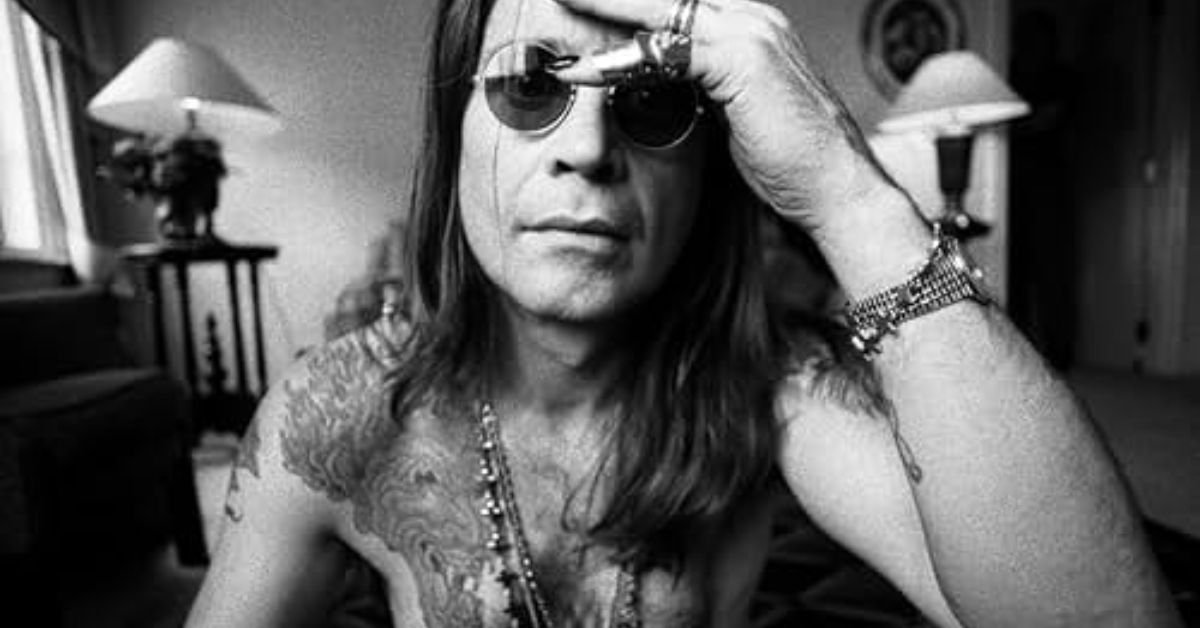

Jack Osbourne has responded to criticism surrounding plans to create a life-sized AI avatar of his late father, Ozzy Osbourne, insisting the project will be handled respectfully.
After the Osbourne family revealed last week that Ozzy’s likeness would be recreated using artificial intelligence, some fans expressed unease about the idea. Addressing those concerns during a YouTube Q&A two days later, Jack defended the project and reassured fans that it would be done thoughtfully.
“It’s gonna be so tasteful,” he said. “It’s really complex what we’re doing. This isn’t just like hooking up an image of my dad to ChatGPT.”
Despite his assurances, the announcement sparked mixed reactions online. Some fans questioned whether Ozzy would have approved of such a project.
“I have a feeling an AI hologram would have been one of the things Ozzy screamed about not doing under any circumstances, but Sharon would make it happen anyway,” one user wrote on X.
Another fan described the concept as “so disturbing.”
The announcement was made during the Licensing Expo in Las Vegas, where Ozzy’s family discussed the future of his brand. They revealed a partnership with technology companies Hyperreal and Proto Hologram to develop a digital version of the legendary rocker.
According to a recap from event organizer License Global, the companies will “create the digital DNA of Ozzy Osbourne, voice, image [and] movement.”
Ozzy Osbourne, known worldwide as the Prince of Darkness and frontman of Black Sabbath, died at age 76 in July last year. According to a death certificate obtained by The New York Times, he died from a heart attack and had been living with coronary artery disease and Parkinson’s disease.
Speaking about the AI recreation in Las Vegas, Jack Osbourne admitted he was surprised by how realistic it had become.
“It’s kind of scary how it’s really very accurate,” he said.
“He will exist digitally as himself for as long as we have computers. Technology has come such a long way to where it’s almost drag and drop.”
Jack explained that the technology has advanced to the point where users can simply create content by entering instructions and inserting the digital Ozzy into projects with minimal effort.
“It’s that simple now,” Osbourne said.
Sharon Osbourne also shared her vision for the project, explaining that the AI version of Ozzy will be interactive.
“You can ask Ozzy anything, and he will answer you in his own voice – and the answers will be what Ozzy would have said,” the late rocker’s wife said.
“We’re going to take it all around the world.”
She compared her hopes for Ozzy’s digital legacy to the enduring popularity of Elvis Presley, whose influence remains strong decades after his death.
“I just want that for Ozzy,” she said.
In an interview with the BBC, Sharon described the early demonstrations of the technology, emphasizing the remarkable level of detail.
“You can see every pore on his face … his beard is coming through, it’s that detailed.”
Ozzy’s AI avatar joins a growing list of digital recreations of deceased entertainment icons. Hyperreal and Proto Hologram previously collaborated on a holographic version of Stan Lee that debuted at L.A. Comic Con in 2025. Hyperreal Digital also created the de-aged version of Paul McCartney featured in the music video for Find My Way with Beck.
Other notable examples include the holographic Michael Jackson performance at the 2014 Billboard Music Awards and the long-running ABBA hologram shows in London.
Not all such projects have been welcomed by fans. In 2019, plans for a holographic Amy Winehouse tour faced significant criticism, with many people describing it as creepy and disrespectful to her memory. The tour was ultimately canceled because of “challenges and sensitivities.”
Similarly, a holographic Whitney Houston residency launched in Las Vegas in 2021 despite backlash from some fans who viewed it as disrespectful.
According to Billboard, Ozzy’s digital avatar will begin appearing later this summer in interactive life-sized touchscreens known as Proto Luma units across the United States and the United Kingdom.

Harnaik Singh Rathor is the Founder, Publisher, and Editor-in-Chief of StudioX News Canada, Canada's multilingual digital news network serving diaspora communities across 44 languages. With a background in media production, public relations, and multicultural communications, he founded StudioX Film and TV Corporation to bridge the gap between mainstream Canadian media and the country's diverse immigrant communities. He is a member of the Canadian Association of Journalists (CAJ), RTDNA Canada, CPRS Vancouver, NEPMCC, and the Canadian Freelance Union (Unifor). Based in Surrey, British Columbia. | LinkedIn: https://www.linkedin.com/in/harnaiksinghrathor/ | Muck Rack: https://muckrack.com/harnaiksinghrathor | Email: editor@studioxnews.ca