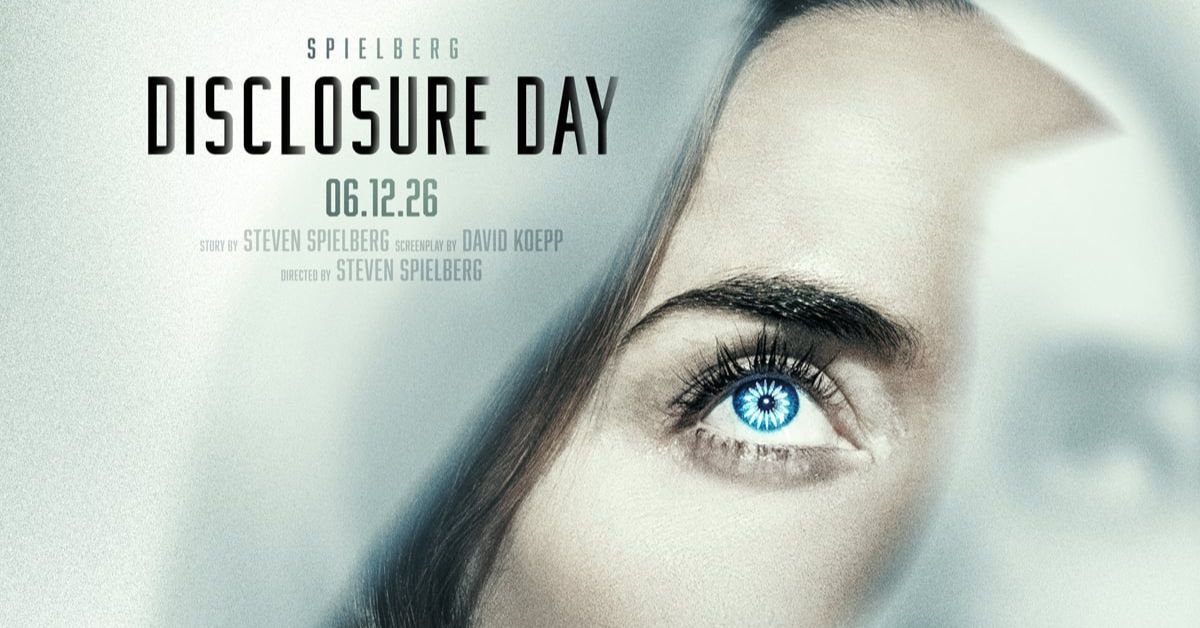

When people think of a great Steven Spielberg movie, a few things usually come to mind: big ideas, emotional storytelling, memorable characters, and a sense of wonder that few filmmakers can match.
That’s part of the reason why Spielberg’s latest film, Disclosure Day, generated so much excitement long before its release. The sci-fi thriller kept most of its plot under wraps, revealing only that it centered on an alien arrival. The secrecy fueled Oscar speculation and positioned the film as one of the year’s biggest cinematic events.
But while Disclosure Day is undeniably ambitious, it doesn’t always manage to bring its many ideas together in a satisfying way.
The film attempts to tackle weighty themes about faith, truth, and humanity’s place in the universe. Yet in trying to balance those philosophical questions with a complex mystery and Spielberg’s signature emotional storytelling, the movie often feels overloaded.
At its core, the story follows several interconnected characters. Josh O’Connor plays Dr. Daniel Kellner, a whistleblower carrying information that could change everything. Colin Firth stars as Noah Scanlon, a government operative determined to keep those secrets hidden. Emily Blunt portrays Margaret Fairchild, a meteorologist who suddenly begins speaking an alien language, while Colman Domingo plays Hugo Wakefield, a mysterious figure guiding events from behind the scenes.
If that sounds confusing, that’s largely by design.
Rather than gradually introducing its world and characters, Disclosure Day throws audiences directly into the middle of the action. The opening sequence feels like the climax of an entirely different movie, and Spielberg offers very little explanation along the way.
The film expects viewers to piece together the story themselves, withholding key information until the very end. In fact, the movie doesn’t fully reveal its larger message or intentions until its final moments.
That approach creates intrigue, but it can also leave audiences feeling disconnected.
Still, many of Spielberg’s strengths remain on display. The film features several expertly crafted action sequences, including tense car chases and suspenseful newsroom scenes. Its central message about hope, belief, and the human spirit also feels unmistakably Spielbergian.
These moments showcase the filmmaker at his best: taking an extraordinary concept and grounding it in sincere emotion, even when the premise borders on the fantastical.
Not everyone has been convinced, however.
While critics haven’t been deeply divided over the film, many reviews have expressed a similar frustration. Some admire its ambition and craftsmanship but struggle with its storytelling choices, particularly its refusal to provide audiences with clear answers until the final act.
Part of that may stem from how the film was developed.
Although Spielberg didn’t write the screenplay himself, he’s long been known for playing a major role in shaping his scripts. During the making of Jurassic Park, for example, he worked closely with multiple screenwriters and helped develop some of the film’s most iconic moments.
For Disclosure Day, longtime Spielberg collaborator David Koepp handled the screenplay, but the story reportedly originated from a concept Spielberg created on his iPad in 2023.
That original idea appears to have inspired one of the film’s defining creative decisions: turning Spielberg’s usual storytelling style upside down. Instead of guiding viewers through the narrative, Disclosure Day intentionally withholds information, saving its explanations and larger revelations for the very end.
The result is a film that’s undeniably bold and often fascinating, but one that may leave audiences admiring its ambition more than fully connecting with its story. For some viewers, that mystery will be part of the appeal. For others, it may feel like a puzzle that never quite comes together.

Harnaik Singh Rathor is the Founder, Publisher, and Editor-in-Chief of StudioX News Canada, Canada's multilingual digital news network serving diaspora communities across 44 languages. With a background in media production, public relations, and multicultural communications, he founded StudioX Film and TV Corporation to bridge the gap between mainstream Canadian media and the country's diverse immigrant communities. He is a member of the Canadian Association of Journalists (CAJ), RTDNA Canada, CPRS Vancouver, NEPMCC, and the Canadian Freelance Union (Unifor). Based in Surrey, British Columbia. | LinkedIn: https://www.linkedin.com/in/harnaiksinghrathor/ | Muck Rack: https://muckrack.com/harnaiksinghrathor | Email: editor@studioxnews.ca