On December 14, 2020, the Honourable Marco E.L. Mendicino, then Minister of Immigration, Refugees and Citizenship, issued a statement marking the 70th anniversary of the United Nations High Commissioner for Refugees (UNHCR). The minister’s message underscored the enduring relevance of the global organization, which was established in 1950 to champion the cause of displaced individuals worldwide. His statement reflected on the profound challenges faced by refugees and the crucial role played by the UNHCR in providing them with a voice on the international stage, highlighting seven decades of persistent advocacy for those compelled to seek safety and a new beginning away from their homelands.
The minister’s words painted a vivid, albeit concise, picture of the human experience at the heart of the global refugee crisis. Across continents and through generations, countless individuals have faced the agonizing decision to depart from everything familiar. This includes not only the physical structures they called home but also the irreplaceable bonds with family and friends, and the material objects that carry sentimental value and define personal histories. The act of fleeing is portrayed as an act of profound bravery, a desperate venture propelled by an intrinsic human desire for security, stability, and the fundamental right to a life free from conflict and persecution. It speaks to the universal aspiration for a future where peace can flourish and where opportunities for a better existence are not merely a distant dream but an attainable reality.
This arduous journey, often undertaken with immense uncertainty, represents a significant rupture from established life. The departure from ‘loved ones’ often implies separation, a tearing of the social fabric that provides comfort and support. The loss of ‘most cherished possessions’ extends beyond mere material value, signifying a severing of ties to personal history, cultural heritage, and a sense of rootedness. The act of ‘setting out’ alone or with few resources, into an unknown future, embodies a deep reservoir of courage. This decision, to trade the known dangers of one’s home for the perilous uncertainty of displacement, is driven by the powerful human imperative to survive and to safeguard the potential for a peaceful existence, not just for oneself but often for future generations.
The establishment of the UNHCR in 1950 emerged from a global recognition of the pressing need for an international body dedicated to the protection of displaced persons. Born in the aftermath of widespread conflict and human displacement, its founding marked a pivotal moment in international humanitarian law and cooperation. Its primary mandate, as articulated by the minister, was to ‘provide a voice at the United Nations to advocate on behalf of refugees.’ This foundational purpose positions the UNHCR not merely as a relief organization, but as a critical diplomatic and legal instrument. It implies a role in ensuring that the plight, rights, and needs of refugees are consistently heard and addressed at the highest levels of global governance, preventing their voices from being lost amidst broader geopolitical concerns.
The concept of ‘providing a voice’ is multi-faceted. It encompasses raising awareness about refugee situations, advocating for protective policies, ensuring adherence to international conventions like the 1951 Refugee Convention, and mobilizing international support and resources. Over seven decades, this mandate has translated into continuous efforts to facilitate safe passage, secure asylum, and promote durable solutions for refugees, whether through voluntary repatriation, local integration, or resettlement in third countries. The UNHCR’s presence at the United Nations ensures that a consistent focus remains on the humanitarian dimensions of displacement, emphasizing the inherent dignity and rights of every individual forced to flee their home, and underscoring the collective responsibility of the international community to uphold these principles.
The commemoration of the UNHCR’s 70th anniversary in 2020 served as a moment to reflect on the enduring nature of its mission. Seven decades of operation highlight not only the persistent challenges of forced displacement but also the unwavering commitment of the international community, channeled through the UNHCR, to address them. The fact that the organization remains as vital now as it was at its inception in the mid-20th century speaks to the unfortunately continuing reality of global instability, conflict, and persecution that compels millions to seek refuge. It underscores the critical importance of a dedicated, impartial entity capable of coordinating humanitarian efforts and championing human rights in the face of complex and evolving crises.
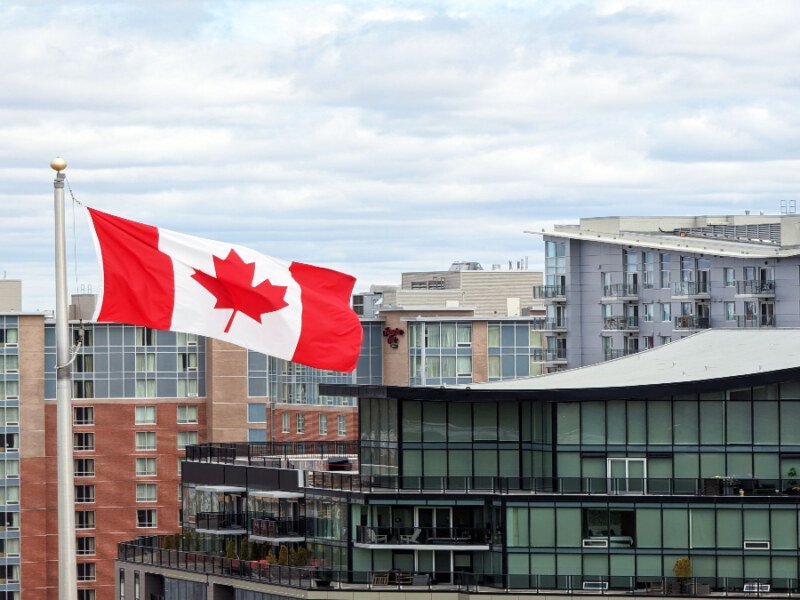
Minister Mendicino’s statement, delivered from Ottawa, implicitly connected Canada’s own values and commitments to the broader global effort championed by the UNHCR. As a nation that has historically welcomed refugees and played a significant role in international humanitarian initiatives, Canada’s Minister of Immigration, Refugees and Citizenship marking this anniversary underscores a national alignment with the UNHCR’s foundational principles. While the statement itself focused on the UNHCR’s historical role and the universal experience of refugees, its issuance by a Canadian federal minister emphasizes Canada’s recognition of the agency’s importance and its continued relevance in a world where the need for protection and advocacy remains profound. It reflects Canada’s participation in the international framework designed to protect vulnerable populations and facilitate their journey towards safety and integration.
The anniversary statement served as a timely reminder of the core humanity involved in the refugee experience and the institutional backbone provided by the UNHCR. It reiterated that behind every statistic of displacement lies an individual story of loss, resilience, and hope for a better life. The call for ‘peace and a better life’ for refugees resonates as strongly today as it did seventy years ago, signifying a shared global responsibility to uphold human dignity and support those who have lost everything but their hope for a secure future, facilitated by organizations like the UNHCR which continue to provide an essential voice for the voiceless on the world stage.
Image: Pixabay
Produced using StudioX’s Human-Core, AI-Shell editorial process from official and public sources.