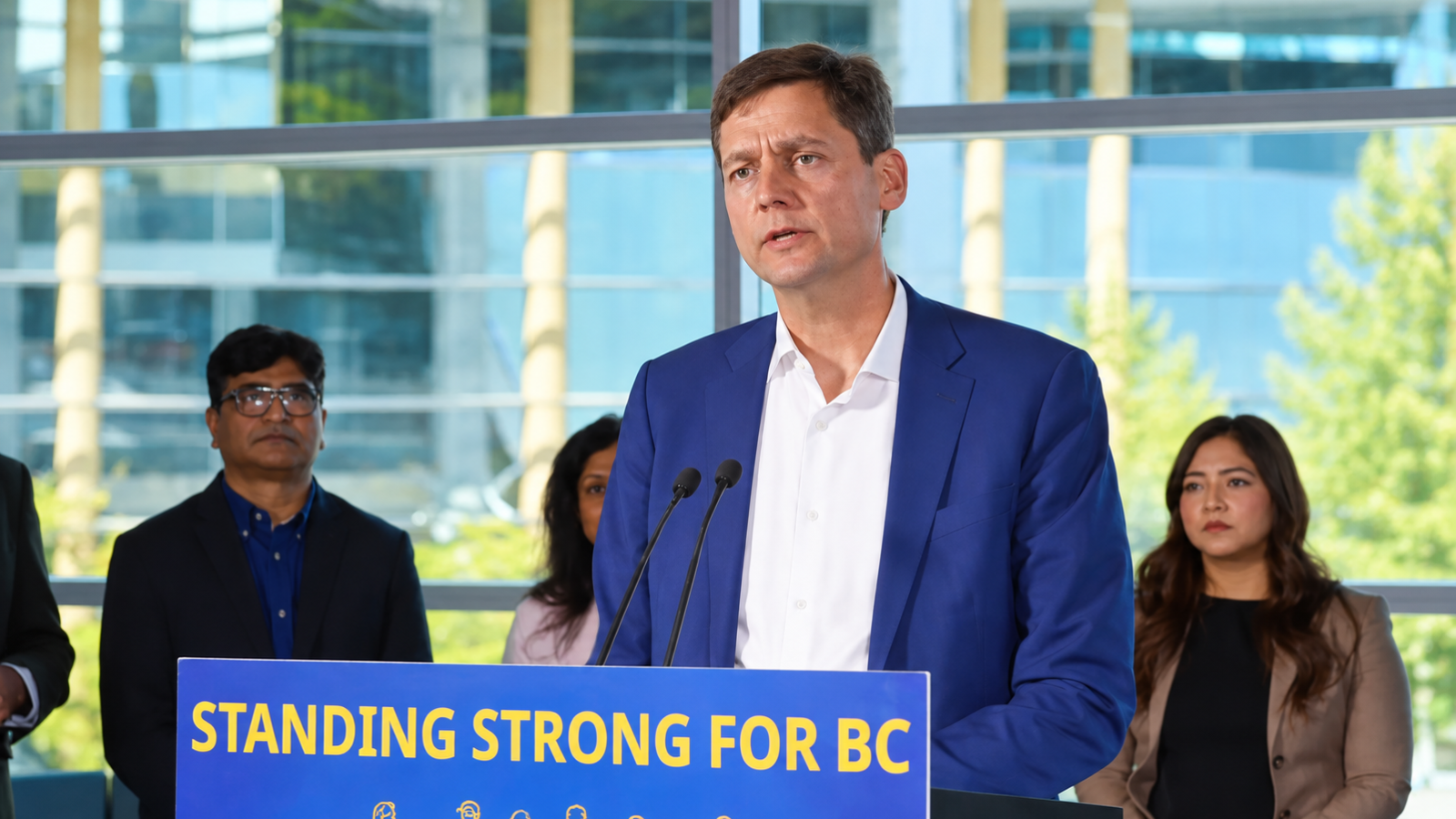

One million people have been connected to a family doctor or nurse practitioner since 2018 as Surrey’s new medical school begins training its first students
SURREY, B.C. — For British Columbians who have spent years looking for a regular doctor, the province says access to primary care is improving — but hundreds of thousands of people remain registered as they search for a provider.
The B.C. government announced Wednesday that one million people have been connected to a family doctor or nurse practitioner since 2018, as Premier David Eby and Health Minister Ravi Kahlon held a health-care update in Surrey.
The province says 4.47 million people, or about 80% of B.C.’s population, now have a primary-care provider.
At the same time, 323,000 people remain registered with the Health Connect Registry as of September 2026.
That contrast was central to the broader picture presented at the Surrey event: significant growth in primary-care attachment, alongside continued demand for doctors and nurse practitioners.
More than 4,000 people being matched each week
Eby said the province is now seeing more than 4,000 people matched with a family doctor or nurse practitioner each week.
He encouraged British Columbians still looking for a family doctor to register through the Health Connect Registry.
Eby said approximately 90% of people who request a family doctor through the registry are being connected.
The government launched its provincial attachment system in 2023 to improve how people are connected with primary-care providers in their communities.
Health Minister Ravi Kahlon said more than 700,000 people have been connected to a family doctor or nurse practitioner during the past three years alone.
“We’re not stopping here,” Kahlon said, adding that the province intends to continue improving primary-care access, strengthening the health-care workforce and expanding services throughout B.C.
The workforce behind the numbers
The province is also pointing to growth in the number of doctors and nurse practitioners working in B.C.
According to the government’s figures, 1,400 new family doctors have been practising in B.C. since 2018, while the number of nurse practitioners has tripled.
B.C.’s population increased by 15% between 2017 and 2025, while the province says the number of longitudinal family doctors increased by 33%.
The government’s Health Human Resources Strategy, launched in 2022, is focused on training, recruiting and retaining doctors, nurses and allied health professionals.
Surrey’s new medical school enters its first year
The announcement was made at the temporary Surrey location of Simon Fraser University’s Stephens Family School of Medicine.
The school’s first cohort of 48 students has begun medical training.
The program is expected to expand in phases to 120 students annually, giving more people an opportunity to train in B.C. while helping build the province’s physician workforce.
Eby told students and faculty that the school has already begun work in its temporary facilities, including laboratory and technology development.
Construction is underway across the street on the school’s permanent facility.
The premier emphasized the importance of training physicians with a focus on community care, particularly family doctors and other health professionals who can provide care in communities throughout B.C.
Nurse practitioner says team-based care is changing primary care
Sangeeta Jaswal, a nurse practitioner at the Urgent and Primary Care Centre in Port Moody, spoke about her experience working in primary and urgent care.
Jaswal said she chose primary care because she wanted to build long-term relationships with patients and families.
She highlighted the importance of longitudinal care for chronic-disease management, prevention and early intervention.
She also pointed to team-based primary care, where physicians, nurse practitioners, pharmacists, social workers and other professionals work together.
Jaswal recently responded to a call for clinical instructors at SFU’s medical school and said she looks forward to supporting the next generation of health-care providers.
Surrey family describes what having a doctor means
The government also invited a Surrey-area family to speak about its experience being connected with a primary-care provider.
Gaurav said that, after receiving his permanent-residency card, getting a family doctor was one of the most important developments for his family.
He described the reassurance of knowing there was a physician familiar with the family’s medical history and available to help when health issues arose.
The family also discussed the importance of having someone who can coordinate care and referrals when additional medical services are needed.
For the province, those personal experiences illustrate the purpose behind its primary-care attachment strategy: creating an ongoing relationship between patients and a provider rather than relying solely on episodic care.
One million connected, but demand remains
The government’s one-million milestone is being presented as a measure of progress since 2018.
But the 323,000 people registered with the Health Connect Registry provide another measure of the continuing demand for primary care.
The province says the number of people being matched each week remains above 4,000.
For British Columbians still looking for a family doctor or nurse practitioner, registration with the Health Connect Registry remains the government’s main pathway for seeking a match.
Questions move from health care to B.C.’s economy
After the health-care announcement, reporters questioned Eby on a much wider range of issues.
The premier discussed B.C.’s economy, U.S. tariffs, international trade, provincial investments and efforts to diversify the province’s economic relationships.
Questions also touched on trade discussions with India and Europe.
Eby said B.C. wants Canada to push for progress on India’s tariff on Canadian softwood lumber during Canada-India trade discussions.
He also expressed support for stronger economic ties with the European Union while emphasizing the importance of B.C.’s relationships with countries across the Asia-Pacific region.
Election questions come at the end
The final portion of the approximately 40-minute press conference shifted toward provincial politics.
Eby confirmed that Cheryl Oates, his former interim chief of staff, is expected to manage the NDP’s next provincial election campaign.
He said the government is prepared for an election but made no election announcement during the event.
Reporters pressed Eby on the timing of an election and the ongoing by-election involving Conservative Leader Caroline Findlay.
Eby said the government remains focused on its current work and returned to the purpose of the Surrey announcement: connecting people with family doctors, supporting patients and building the health-care workforce.
He said there had been no announcement about an election that day.
The bottom line for patients
B.C.’s latest numbers tell two stories at once.
The province says one million people have been connected to primary care since 2018, with 4.47 million people now having a family doctor or nurse practitioner.
But 323,000 people are still registered with the Health Connect Registry, meaning the demand for primary-care attachment remains substantial.
Meanwhile, Surrey’s new medical school has begun training its first 48 students, with plans to grow to 120 students annually.
For the province, the long-term strategy is clear: connect more people to existing providers while training and recruiting more health-care professionals for the future.
For patients still looking for a regular doctor, the immediate question remains how quickly that growing capacity can translate into an ongoing primary-care relationship.
StudioX News will continue to follow health-care access, Surrey’s medical-school expansion and developments affecting patients across British Columbia.

Harnaik Singh Rathor is the Founder, Publisher, and Editor-in-Chief of StudioX News Canada, Canada's multilingual digital news network serving diaspora communities across 44 languages. With a background in media production, public relations, and multicultural communications, he founded StudioX Film and TV Corporation to bridge the gap between mainstream Canadian media and the country's diverse immigrant communities. He is a member of the Canadian Association of Journalists (CAJ), RTDNA Canada, CPRS Vancouver, NEPMCC, and the Canadian Freelance Union (Unifor). Based in Surrey, British Columbia. | LinkedIn: https://www.linkedin.com/in/harnaiksinghrathor/ | Muck Rack: https://muckrack.com/harnaiksinghrathor | Email: editor@studioxnews.ca