
 Add StudioX as a preferred source on Google
BC Ferries says it will work toward cutting underwater noise from its fleet by 50 per cent in Southern Resident killer whale critical habitat by 2036, under a new conservation agreement with Fisheries and Oceans Canada and Transport Canada announced October 29.
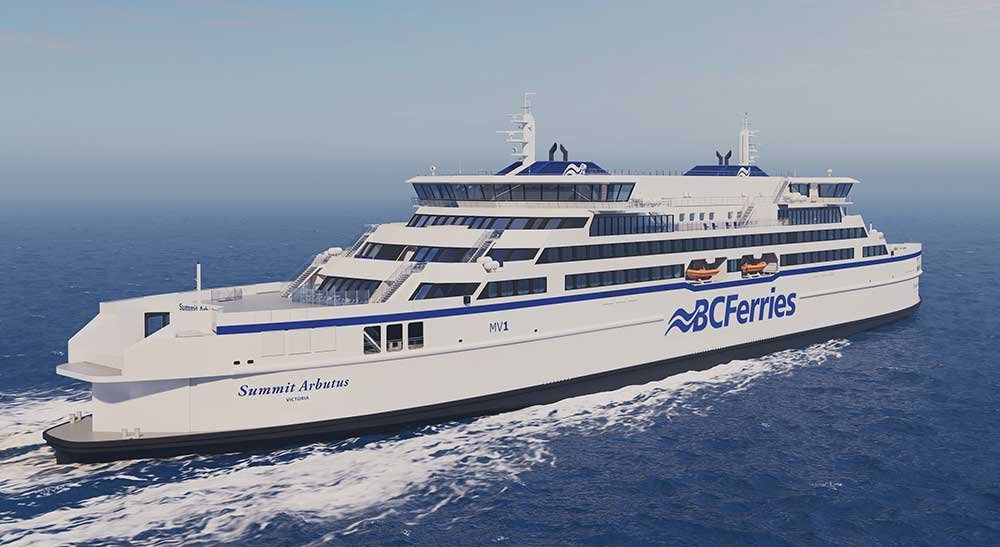
The target is measured against a 2019 baseline and applies to the overall underwater radiated noise produced by BC Ferries vessels within the whales’ critical habitat. The company says it plans to develop and maintain an Underwater Radiated Noise Management Plan, using fleet renewal, vessel retrofits, quieter technologies and changes to maintenance and operating practices.
The agreement is with Fisheries and Oceans Canada (DFO) and Transport Canada under Section 11 of the federal Species at Risk Act. It also sets out work to reduce physical disturbance and the risk of vessels striking at-risk cetaceans through monitoring, mitigation and information-sharing.
What the 50 per cent target means
BC Ferries has not described the target as an immediate reduction. Its October 29 announcement says the company will develop a management plan and work toward the 2036 goal through fleet renewal and/or retrofits. The target is specific to BC Ferries’ vessels in Southern Resident killer whale critical habitat; it is not a 50 per cent reduction target for every vessel operating in the Salish Sea.
Transport Canada will provide technical advice informed by research into noise measurement and monitoring, as well as vessel design, maintenance and operating approaches. DFO will contribute expertise on how underwater noise and vessel strikes affect at-risk cetaceans and on measures that could reduce those threats.
Why underwater noise matters to killer whales
Southern Resident killer whales rely on sound to communicate, navigate and locate prey. Canada’s scientific assessment of killer whales identifies vessel traffic as a major source of chronic underwater noise. That noise can interfere with the frequencies whales use and may affect communication and foraging behaviour.
The federal government has identified acoustic and physical disturbance from vessels, reduced prey availability and environmental contaminants as major pressures on the Southern Resident population. The new BC Ferries agreement addresses part of the vessel-related threat; it does not resolve the other pressures facing the whales.
How the agreement fits with existing whale-protection rules
The agreement is separate from the federal vessel-management measures already in effect for 2026. Those measures include a mandatory 1,000-metre approach distance for Southern Resident killer whales from June 1, 2026, to May 31, 2027, along with seasonal speed-restricted and vessel-restricted zones in parts of Southern British Columbia’s coastal waters.
The new agreement focuses on BC Ferries’ own fleet and on longer-term changes to vessel noise, technology and operating practices. It also complements the Vancouver Fraser Port Authority-led Enhancing Cetacean and Habitat Observation (ECHO) Program, which coordinates voluntary measures with commercial shipping partners.
What residents should watch next
The key test will be the management plan: how BC Ferries measures noise against the 2019 baseline, which vessels are prioritized for upgrades, how quickly quieter technologies are introduced, and how progress is reported publicly.
BC Ferries says it will continue research, technology development, maintenance improvements and public outreach. The agreement does not provide a vessel-by-vessel retrofit schedule in the announcement, so the timing and measurable milestones will matter as the 2036 target approaches.
The announcement comes as marine traffic and port capacity are receiving renewed attention in British Columbia. On October 30, Ottawa designated the proposed Roberts Bank Terminal 2 expansion in Delta a project of national interest. That is a separate decision, but it places added importance on transparent monitoring of cumulative impacts on marine ecosystems and on whether conservation commitments translate into measurable reductions.
Sources
- BC Ferries: October 29, 2026 conservation agreement announcement
- Transport Canada: 2026 measures to protect Southern Resident killer whales
- COSEWIC: Killer whale assessment and status report
- Fisheries and Oceans Canada: May 19, 2026 whale-protection investment
- Transport Canada: October 30, 2026 Roberts Bank Terminal 2 designation
Harnaik Singh Rathor is the Founder, Publisher, and Editor-in-Chief of StudioX News Canada, Canada's multilingual digital news network serving multilingual diaspora communities across Canada. With a background in media production, public relations, and multicultural communications, he founded StudioX Film and TV Corporation to bridge the gap between mainstream Canadian media and the country's diverse immigrant communities. He is a member of the Canadian Association of Journalists (CAJ), RTDNA Canada, CPRS Vancouver, NEPMCC, and the Canadian Freelance Union (Unifor). Based in Surrey, British Columbia. | LinkedIn: https://www.linkedin.com/in/harnaiksinghrathor/ | Muck Rack: https://muckrack.com/harnaiksinghrathor | Email: editor@studioxnews.ca