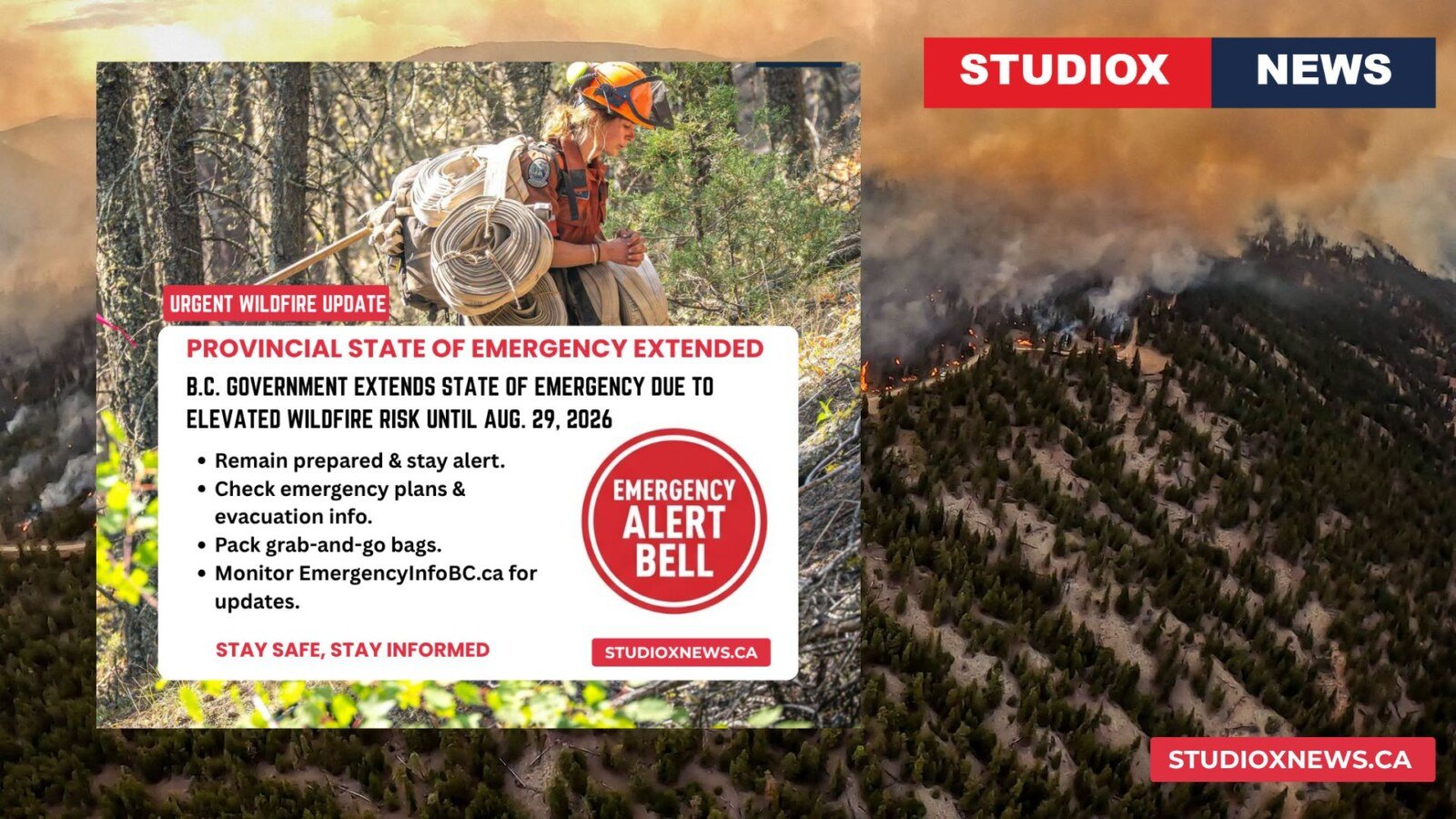
The Government of British Columbia has extended the provincewide state of emergency for another seven days until Saturday, Aug. 29, 2026, as wildfire conditions remain elevated across multiple regions.
The extension was announced Friday afternoon by the Ministry of Emergency Management and Climate Readiness. It follows advice from emergency-management officials and keeps extraordinary powers available under the Emergency and Disaster Management Act should they be needed.
Officials emphasized that the province has not yet needed to issue any emergency orders under the provincial declaration. The tools remain in place so the government can respond rapidly if conditions worsen.
Why the Extension Was Ordered
The original state of provincial emergency was declared on Aug. 8, 2026, as wildfires burned across the province, including the aggressive Bald Range wildfire near Summerland. At the peak, more than 20,000 people were forced from their homes.
Most residents have since been able to return. However, thousands of people remain under evacuation alerts or orders, and wildfire risk stays elevated in the Okanagan region and other parts of B.C. due to persistent warm and dry conditions.
The Bald Range fire continues to challenge crews. As of Friday, it was mapped at approximately 24,100 hectares and remained out of control, with difficult access and fire behaviour reported on the south and west flanks. Firefighters are maintaining 24-hour operations, conducting mop-up near homes, and building contingency lines.
Current Evacuation Picture
While the majority of Summerland residents have returned home (many still on alert), roughly 80 properties in the area remained under order as of Friday morning. Re-entry for some rural zones, including parts of Faulder and Meadow Valley, has moved more slowly. Across the province, thousands of properties continue to sit under either evacuation order or alert.
Air quality warnings related to wildfire smoke remain in effect for central and southern B.C.
How Residents Can Stay Prepared
Provincial officials are urging all British Columbians to stay ready even if their community is not currently under threat. Recommended actions include:
- Review and update your family emergency plan so everyone knows what to do.
- Pre-register for Emergency Support Services at ess.gov.bc.ca or through the BC Services Card app.
- Keep grab-and-go bags packed at home, in the car, and at work. Include medications, important documents, chargers, water, food, and pet supplies.
- Monitor official sources regularly — local government, First Nations emergency accounts, EmergencyInfoBC.ca, and @EmergencyInfoBC on X.
- Follow all directions immediately if an evacuation order is issued.
Looking Ahead
Warm, dry weather is expected to continue in many areas. Forecast models suggest some precipitation may arrive later, but officials stress that fire danger will remain elevated through the rest of the summer and into early fall in parts of the province.
The state of emergency does not change day-to-day local response. Local governments and First Nations continue to manage evacuations and alerts under their own authorities. The provincial declaration simply ensures additional tools are available if a rapid, large-scale response becomes necessary.
For real-time information:
- Evacuation alerts and orders: EmergencyInfoBC.ca
- Wildfire activity: wildfiresituation.nrs.gov.bc.ca
- Road conditions: DriveBC.ca
- Emergency Support Services: ess.gov.bc.ca
StudioX News will continue to monitor developments and provide updates as conditions change.
Quick Facts
- Extension date: Until Saturday, Aug. 29, 2026
- Original declaration: Aug. 8, 2026
- Peak evacuations: More than 20,000 people
- Current status: Most people home; thousands still on alert or order
- Key fire: Bald Range near Summerland (~24,100 ha, out of control)
- Powers used so far: None under the provincial declaration