
Two decorated Canadian athletes are among those competing at this weekend’s inaugural Enhanced Games — which is either the future of sport or its downfall, depending on who you ask.
Here’s everything you need to know about the competition, first introduced as a concept in June 2023, and already dubbed the “Doping Olympics” and the “Steroid Olympics.”
What are the Enhanced Games?
The global multi-sport event, created by Australian businessman Aron D’Souza, allows athletes to compete while using performance-enhancing drugs (PEDs) banned in traditional international sports. D’Souza revealed his mission at an event last May, calling the games “a movement.”
“We’re embracing the full spectrum of human potential, and that begins with transparency, science and choice.”
Set against the glow of the Las Vegas strip, the event is scheduled this Sunday, with roughly 2,500 invite-only spectators expected to attend.
The winners of each event will be awarded $250,000 US, with $1 million US promised for those who break world records in the 100-metre sprint and 50-metre butterfly.
Of course, even if a record is broken, it will not be recognized by any traditional sports governing body.
2 Canadians taking part
Forty-two athletes from around the world are set to compete in the following events:
Track and field: 100m sprint, 100m and 110m hurdles.
Weightlifting: snatch, clean and jerk.
Strongman: deadlift.
Swimming: 50m and 100m freestyle, 50m and 100m butterfly.
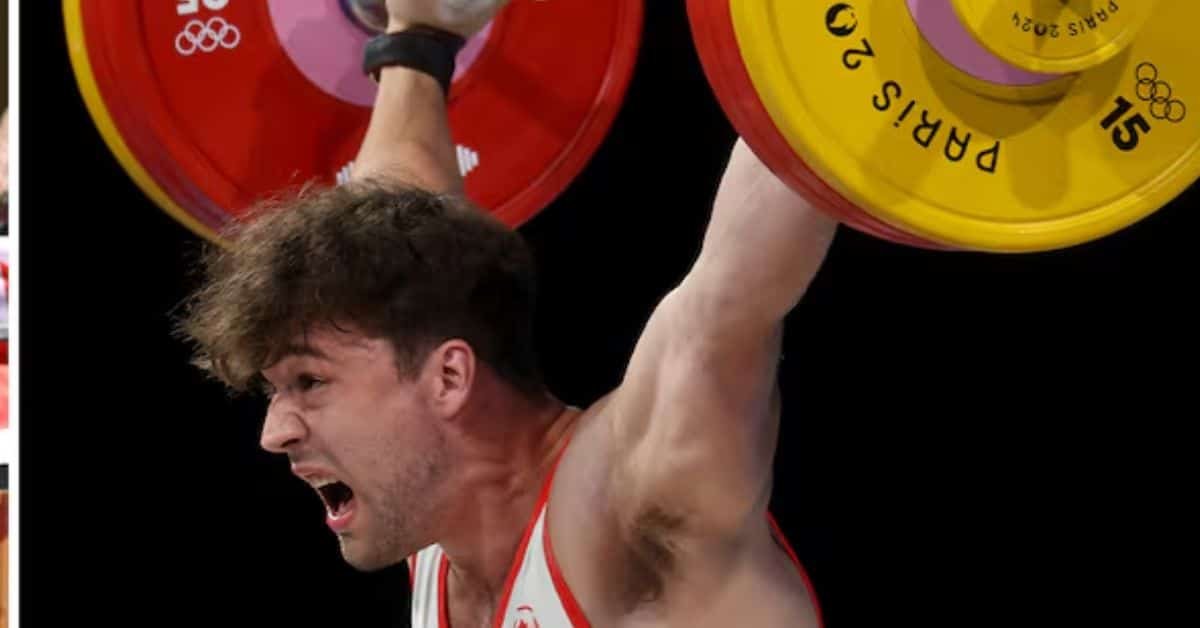
Two-time World’s Strongest Man champion Mitchell Hooper and Pan Am/Commonwealth Games record holder Boady Santavy are the only two Canadians participating.
Santavay, who is also a two-time Olympic weightlifter, said he felt motivated to compete given his sport’s long-documented doping issues — specifically, that he’s competed clean against athletes using PEDs.
This, at least, is “a level playing field,” Santavy told CBC Sports.
His comments touch on the central controversy surrounding the games.
The controversy
Critics, including the World Anti-Doping Agency (WADA) and the International Olympics Committee (IOC), say the event legitimizes doping and risks normalizing the use of potentially harmful PEDs, despite decades of work by anti-doping organizations to rid banned substances from elite sports.
The IOC and WADA athletes commission released a statement last year expressing outrage over the event, calling it a “betrayal of everything that we stand for.”
“Promoting performance-enhancing substances sends a dangerous message – especially to current and future generations of athletes,” the statement says.
“Such substances can lead to serious long-term health consequences – even death – and encouraging athletes to use them is utterly irresponsible and immoral.”
World Aquatics, meanwhile, introduced a rule banning those who participate in the Enhanced Games.Enhanced Games has generally responded to criticism by pointing out that doping already exists as an open secret in professional sport — framing itself as “a more fair and equitable platform” disrupting a corrupt and archaic industry.
“We live in a world transformed by science, from vaccines to AI,” D’Souza said at the event last May.
“But sport has stood still. Until today. We are not updated the rulebook — we are rewriting it. And we’re doing it safely, ethically and boldly.”
If Sunday’s event does end up tempting athletes to go try steroids without the full medical knowledge or supervision being offered at the Enhanced Games, Ian Ritchie, an associate kinesiology professor at Brock University in Ontario, says, “that would be a problem.”
“At the same time, I’m not worried that that’s going to happen because [it’s] already happened,” he told CBC News.