
If you’re an internationally trained professional in British Columbia, you already know the frustration: you have the education, the experience, and the skills — but the licensing process can still feel like a maze. In this post, we break down what’s changing, why it matters, and how B.C.’s credential recognition approach is designed to help newcomers enter their professions faster.
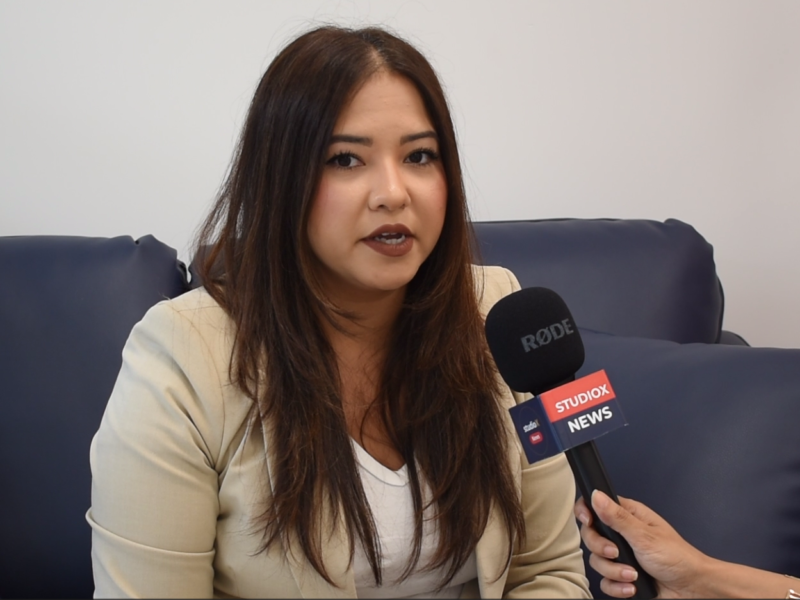
When StudioX News spoke with MLA Sunita Dhir, parliamentary secretary for international credentials and MLA for Vancouver-Langara, one theme came through clearly: getting people into the jobs they’re already qualified to do is not just an immigration issue — it’s a housing, health, education, and economic issue too. If you’re a newcomer, an employer, or someone trying to understand B.C.’s credential recognition reforms, this guide will help you make sense of the big picture.
Why credential recognition is such a big issue in B.C.
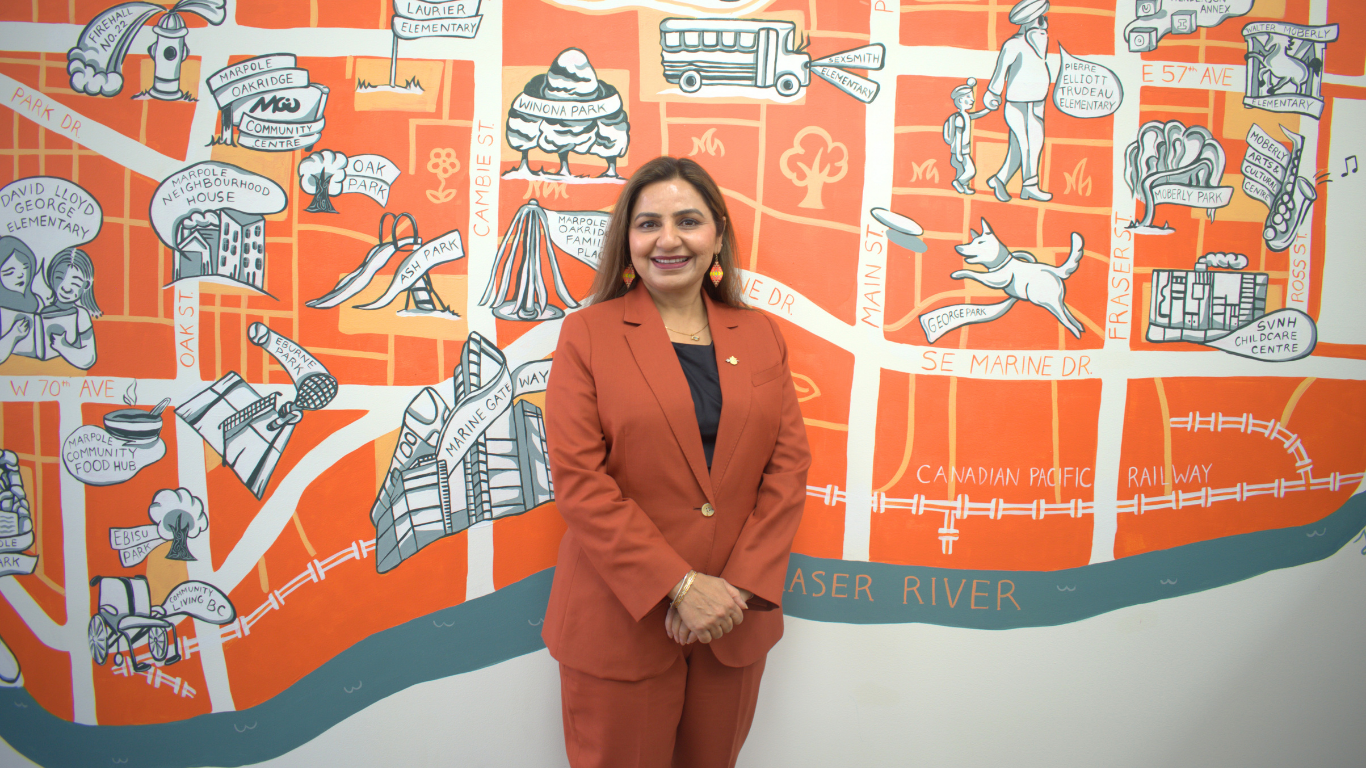
British Columbia is one of the most diverse provinces in Canada, and Vancouver-Langara reflects that diversity especially well. The riding includes Indo-Canadian, Chinese, South Asian, Filipino, and many other communities, and many residents arrived in B.C. with strong professional backgrounds.
The problem is that coming to Canada with a degree or years of work experience does not automatically mean you can step into your profession right away.
That’s where so many newcomers get stuck.
As Dhir explained, many internationally trained professionals end up taking survival jobs — work at places like McDonald’s, Canada Post, Superstore, or driving taxis — while they wait for their credentials to be recognized. That gap is costly for families, for the economy, and for the professionals themselves.
“You won’t believe that I have met doctors, engineers, and lawyers driving taxis because they face barriers in getting licensed in their fields,” she said.
This is why credential recognition has become such an important policy issue in B.C. It’s not just about fairness, although fairness matters. It’s also about making sure qualified people can fill real labour shortages in fields where B.C. needs workers now.
A historic connection to Vancouver-Langara
Dhir framed the file as personal, not only provincial. She has lived in the riding, including South Vancouver and Marpole, and said representation matters because she knows the priorities.
She reflected on the significance of B.C. NDP representation in Vancouver-Langara and said: “Because I have lived in my riding all my life, it means so much to me. I know the priorities.”
That local connection is how she described her work with immigrants, families and seniors — not as a distant announcement, but as issues people raise when they walk into a constituency office.
What the International Credentials Recognition Act changes
The biggest policy shift discussed is B.C.’s International Credentials Recognition Act, or ICRA.
At a basic level, the law was created to remove unnecessary barriers for internationally trained professionals who want to work in regulated occupations. Most of the act took effect on July 1, 2024. The final Canadian work experience requirement for eligible applicants was removed on July 1, 2025.
That last part is especially important.
For years, one of the toughest barriers for newcomers was the requirement to already have Canadian work experience before they could get licensed. That created a catch-22:
- You need a licence to get a job.
- You need a job to get Canadian experience.
- You need Canadian experience to get licensed.
ICRA is meant to break that cycle for applicants who already hold a valid international certification, are in good standing, and can show independent practice in their profession.
The act now covers 29 occupations and works with 18 regulators. It also addresses several practical barriers that make the process harder than it needs to be:
- Licensing fees are now the same for internationally trained professionals and domestic applicants, unless a difference reflects the actual extra cost of processing that file.
- Redundant English-language test requirements have been removed or limited.
- Regulators have been pushed to simplify their websites so people can understand the steps more easily.
- Eligible applicants no longer need Canadian work experience before licensure.
That combination of changes matters because barriers are often not just one big obstacle. They are usually many smaller ones stacked together — fees, forms, tests, unclear instructions, and experience requirements that don’t make sense for people who are already qualified.
Which professions are covered — and why that matters
One of the most practical parts of the discussion is that the law is not abstract. It affects real jobs.
The act covers occupations such as:
- Engineers
- Architects
- Teachers
- Lawyers
- Veterinarians
- Social workers
- Paramedics and emergency medical assistants
- Early childhood educators
- Land surveyors, geoscientists, accountants and related applied-science designations
These are professions where licensing is essential because the work affects public safety, education, health, and legal services. They are also fields where immigrants often arrive with experience that is underused simply because the path to licensure is too complicated.
That’s why broader credential recognition reform can have such a large impact.
When an engineer can work as an engineer, a teacher can teach, or a paramedic can enter the field sooner, everyone benefits. Employers fill shortages faster. Communities get more services. Families recover income more quickly. And professionals are less likely to spend years doing work that doesn’t match their training.
The discussion also pointed to the scale of opportunity in B.C. more generally, including job creation over the last decade. The message Dhir returned to is clear: B.C. has work, and newcomers should be able to access it.
The path to employment, in her words
Dhir said the government is actively working on initiatives to simplify licensing through ICRA so internationally trained professionals can gain employment in their fields more quickly.
She described meeting people with impressive backgrounds who still could not practise. Doctors, engineers and lawyers in survival work was not a talking point for her — it was who walks through the door.
The point of the act, as she described it, is not to lower standards. It is to stop making qualified people start from zero.
Why newcomers still need support beyond licensing
Licensing reform is only one part of the equation.
A recurring theme in the discussion is that newcomers need a broader support system if they are going to settle successfully. That includes housing, transit, schools, child care, senior support, and access to information in multiple languages.
When people first arrive, their top priorities are often basic stability:
- Finding housing near transit
- Getting affordable rent
- Making sure children can attend a good school
- Figuring out food affordability
- Understanding where to access services
Dhir put housing first. “Most people who come here, their priority is housing, getting a good place, near transit, and affordable rent,” she said. She acknowledged that affordability remains a crucial issue, and that rents have not come down in several years.
That’s why WelcomeBC and similar resources matter. Newcomer information is available in many languages, and the province has also worked on materials that help people understand how to find services, doctors, education support, and other essentials.
There was also a strong emphasis on family supports in Vancouver-Langara specifically. The conversation mentioned:
- New child-care spaces
- A new community centre in Marpole
- A senior centre in Sunset
- Work with neighbourhood houses to create more affordable child care
- Ongoing support for families through food drives, diaper donations, school-supply collections, and community barbecues
On child care she was direct: “We recognize that people need to work and women need childcare.”
This matters because people do not arrive in a vacuum. A professional trying to complete licensing paperwork may also be looking after children, caring for elders, working a temporary job, and trying to understand a new system all at once.
That’s why integrated support is so important. If a province wants newcomers to succeed in their professions, it also has to make it possible for them to live, study, and care for their families while they do it.
Building bridges in the riding
Dhir emphasized integration and accessibility in government services. She said she has hosted events such as B.C. Day, collecting food and school supplies for families in need. Her approach, as she described it, is inclusivity: every voice heard, every concern addressed.
The discussion also noted that some constituents said they had not seen an accessible MLA in years. That kind of trust is built when government is visible, responsive, and willing to solve everyday problems — not just announce policies.
The bigger lesson: policy works best when it removes friction
What stands out in this discussion is not just the law itself, but the philosophy behind it.
The province is trying to remove friction from a system that was too hard to navigate. Instead of making people prove themselves again and again, B.C. is moving toward a model that recognizes prior education, experience, and professional skill.
That’s especially visible in the example discussed: if you were a teacher in another country, you should be able to understand what it takes to become licensed in B.C. without endless confusion. The process should be clear, accessible, and fair.
This is also why the conversation repeatedly returns to accessibility and communication. A policy can be good on paper, but if people can’t understand it, it doesn’t help enough. Simplifying websites, removing unnecessary tests, and making information available more clearly are not small details — they are core parts of the reform.
For newcomers, the practical takeaway is to start early. If you know your profession is regulated, check your licensing body, review the requirements, and look at WelcomeBC and other provincial resources as soon as possible.
For employers and community organizations, the takeaway is different but equally important: recognize that skilled immigrants often need navigation support, not skepticism. The goal is not to lower standards. The goal is to remove barriers that do not measure actual competence.
What this means for Vancouver-Langara residents
Because Sunita Dhir represents a diverse riding and has lived there, she framed these issues in a very local way.
Residents in Vancouver-Langara are not just asking for abstract policy changes. They want:
- More affordable housing
- Better access to doctors
- Strong schools and child care
- Safer streets and traffic improvements
- Support for seniors and families
- Faster pathways into meaningful work
That makes credential recognition part of a much larger community story. If people can work in their field sooner, they are more likely to afford housing, support their families, and contribute to the local economy.
It also helps explain why accessibility matters in politics. People want to see their MLA, get answers, and know the path from arrival to a real job is not designed to wear them down.
Empowering newcomers: the through-line
Navigating immigration and integration is a journey with both challenges and opportunities. In this conversation, Dhir’s through-line was simple: skilled people are already here. The system should stop wasting them.
For a deeper version of the same discussion, the full conversation is the source of the quotes above. The policy file is public: ICRA, 29 occupations, 18 regulators, July 1, 2024 in force, July 1, 2025 for the Canadian work-experience rule on eligible applicants.
Frequently Asked Questions
What is B.C.’s International Credentials Recognition Act?
It is a provincial law designed to reduce barriers for internationally trained professionals seeking licensure in regulated occupations. It simplifies parts of the licensing process and removes some requirements, including Canadian work experience for eligible applicants.
Which occupations are covered by the act?
The act covers 29 occupations overseen by 18 regulators, including engineers, architects, teachers, lawyers, veterinarians, social workers, and paramedics.
Do internationally trained professionals still need to meet licensing standards?
Yes. The law does not eliminate licensing requirements. It is meant to make the process fairer and less repetitive while still protecting public safety and professional standards.
Why is Canadian work experience such a big issue?
For many newcomers, it created a catch-22: they needed Canadian experience to get licensed, but they needed a licence to get the job that would give them Canadian experience. Removing that barrier for eligible applicants helps break the cycle.
Where can newcomers find help in B.C.?
Start with WelcomeBC and newcomer guides available in multiple languages. Dhir’s Vancouver-Langara office is at 6615 Main Street, 604-660-8380, Sunita.Dhir.MLA@leg.bc.ca.
One-sentence summary
British Columbia’s credential recognition approach is designed to help internationally trained professionals get licensed faster by removing unnecessary barriers, simplifying the process, and connecting newcomers to the broader supports they need to succeed.
Quick Facts
- Who: Sunita Dhir, MLA Vancouver-Langara; parliamentary secretary for international credentials
- Law: International Credentials Recognition Act (ICRA)
- In force: July 1, 2024; Canadian work-experience rule for eligible applicants July 1, 2025
- Scope: 29 occupations, 18 regulators
- Local: Marpole community centre, Sunset senior centre, child-care spaces, WelcomeBC
- Does not: lower professional standards
StudioX News Canada — Local information. Canada-first.

Harnaik Singh Rathor is the Founder, Publisher, and Editor-in-Chief of StudioX News Canada, Canada's multilingual digital news network serving diaspora communities across 44 languages. With a background in media production, public relations, and multicultural communications, he founded StudioX Film and TV Corporation to bridge the gap between mainstream Canadian media and the country's diverse immigrant communities. He is a member of the Canadian Association of Journalists (CAJ), RTDNA Canada, CPRS Vancouver, Unifor, NEPMCC, and the Canada Freelance Union. Based in Surrey, British Columbia. | LinkedIn: https://www.linkedin.com/in/harnaiksinghrathor/ | Muck Rack: https://muckrack.com/harnaiksinghrathor | Email: editor@studioxnews.ca