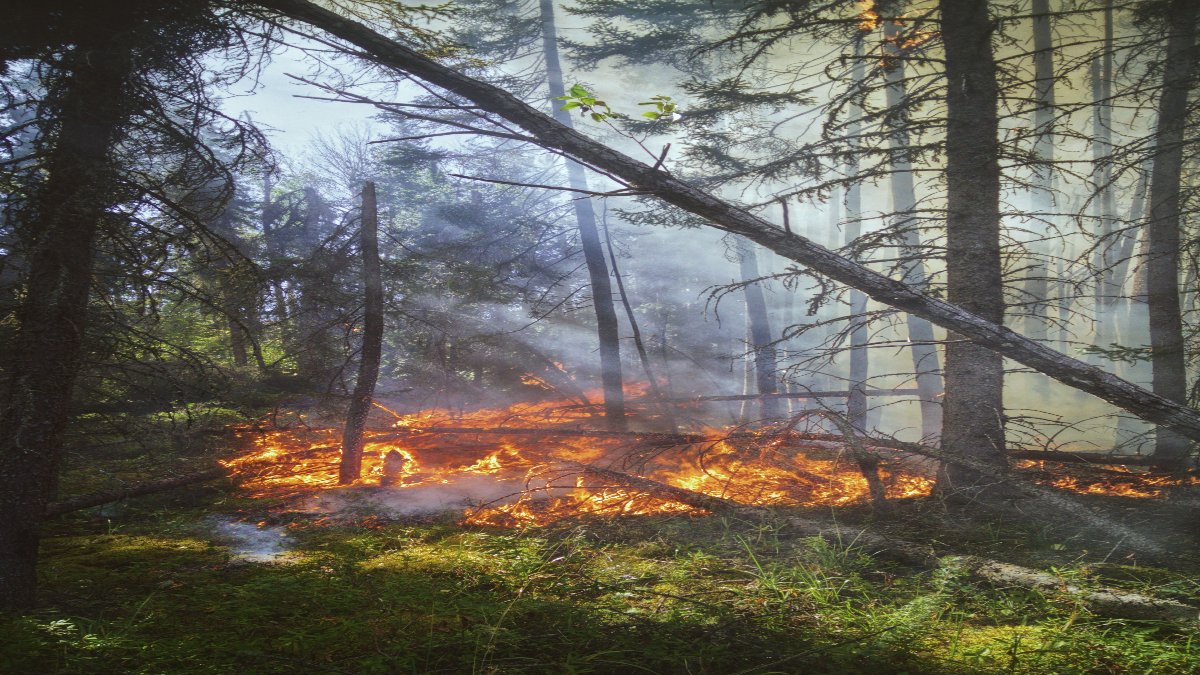
Canada wildfire smoke US has become one of North America’s biggest environmental stories this week as smoke from hundreds of active wildfires drifts south, triggering air quality alerts across more than 20 American states. From the Upper Midwest to the Northeast, millions of people have woken up to hazy skies, the smell of smoke in the air, and warnings from health officials to limit time outdoors.
The smoke isn’t coming from a single fire. Instead, it is the result of hundreds of wildfires burning across several Canadian provinces, including Ontario, Manitoba, Saskatchewan, Alberta, and British Columbia. While many of the fires are concentrated hundreds of kilometres away from major cities, changing wind patterns have carried smoke over vast distances, affecting communities far beyond the fire zones.
Canada Wildfire Smoke US Spreads Across More Than 20 States
Meteorologists say the smoke has stretched deep into the United States, with air quality alerts issued in parts of Minnesota, Wisconsin, Michigan, Illinois, Indiana, Ohio, Pennsylvania, New York, New Jersey, Massachusetts, Connecticut, Vermont, New Hampshire, and Maine. Conditions have also affected portions of Iowa and neighboring states as weather systems continue pushing smoke southward.
Residents in several cities reported noticeably hazy conditions, with skylines partially hidden behind a layer of grey smoke. In some areas, the sun appeared orange or red during sunrise and sunset as smoke filtered the sunlight.
Air quality levels have varied throughout the day depending on wind direction and local weather conditions. Some regions experienced moderate pollution levels, while others briefly recorded air quality that health officials classified as unhealthy for sensitive groups.
Forecasters say smoke conditions are likely to change over the coming days. Even communities that wake up to clear skies may see deteriorating air quality later as shifting winds carry new smoke into the region.
Why the Smoke Is Traveling So Far
Wildfire smoke is made up of tiny particles and gases that can remain suspended high in the atmosphere for days. Once smoke reaches upper air currents, it can travel hundreds or even thousands of kilometres before gradually settling closer to the ground.
This year’s wildfire season has produced ideal conditions for widespread smoke transport. Persistent heat, dry vegetation, low humidity, and gusty winds have helped fires grow rapidly while also pushing smoke across provincial and international borders.
Environmental experts note that smoke doesn’t always stay close to the fires themselves. Communities far from active flames can still experience poor air quality if weather systems steer smoke overhead.
Satellite imagery throughout the week has shown enormous smoke plumes extending across central Canada and into large sections of the United States, creating one of the season’s most significant cross-border air quality events.
Air Quality Alerts Issued Across the U.S.
Public health agencies are urging residents to pay close attention to local Air Quality Index (AQI) readings before spending extended periods outside.
Children, seniors, pregnant women, and people with asthma, heart disease, or chronic lung conditions face the greatest health risks during periods of heavy wildfire smoke. Officials recommend limiting strenuous outdoor activities, keeping windows closed where possible, and using air conditioning or portable air purifiers to reduce indoor smoke exposure.
Doctors also advise anyone who must spend prolonged periods outdoors to consider wearing a properly fitted N95 respirator, which can help reduce exposure to harmful fine particles.
Many schools, summer camps, sports organizations, and community groups are monitoring local air quality before holding outdoor events. In areas where pollution levels rise significantly, organizers may delay or cancel activities until conditions improve.
Canada’s Wildfire Season Continues to Intensify
Canada continues to battle one of its most active wildfire seasons in recent years. Hundreds of fires remain active across several provinces, with emergency crews working around the clock to contain new outbreaks and protect nearby communities.
Northern Ontario remains one of the hardest-hit regions. Several communities, including First Nations and remote towns, have already been evacuated as rapidly changing fire conditions threaten homes and critical infrastructure.
Firefighters from across Canada, supported by aircraft and specialized emergency crews, continue responding to fires under difficult weather conditions. Authorities have also implemented fire restrictions in many regions, asking residents to avoid activities that could ignite new fires.
Officials say continued hot temperatures and limited rainfall could allow existing fires to remain active and create new wildfire risks in the coming weeks.
Health Officials Share Safety Advice
Medical experts emphasize that even healthy individuals may notice temporary symptoms when wildfire smoke levels increase. Common complaints include sore eyes, coughing, throat irritation, headaches, and shortness of breath.
People are encouraged to check local air quality forecasts regularly and adjust outdoor plans when pollution levels rise. Those with existing respiratory conditions should keep prescribed medications readily available and follow guidance from healthcare providers.
Experts also recommend reducing indoor sources of air pollution, such as smoking, burning candles, or using wood-burning fireplaces, while smoke levels remain elevated outdoors.
Although smoke conditions often improve as weather systems change, authorities caution that new waves of smoke could continue reaching parts of the United States as long as major wildfires remain active across Canada.
The ongoing Canada wildfire smoke US event is a reminder that the effects of large wildfires are no longer confined to the immediate burn areas. Smoke can travel across borders, disrupt daily life, and create public health concerns for millions of people living far from the flames.

Shweta Malik is a content writer and journalist contributing to StudioX News. With a background in digital and print media—including reporting and editorial roles at Zee Media and The Tribune—she focuses on delivering engaging, original reporting. She holds an M.A. in Journalism and Mass Communication from Kurukshetra University.