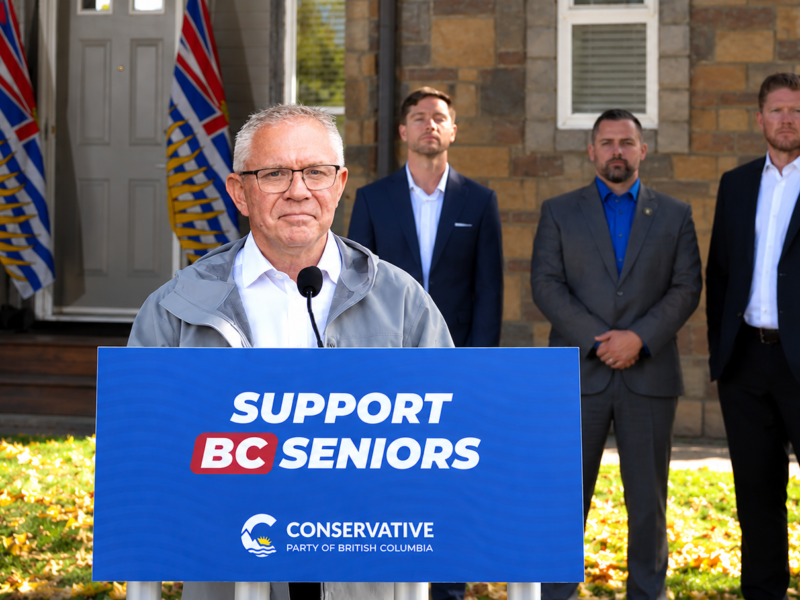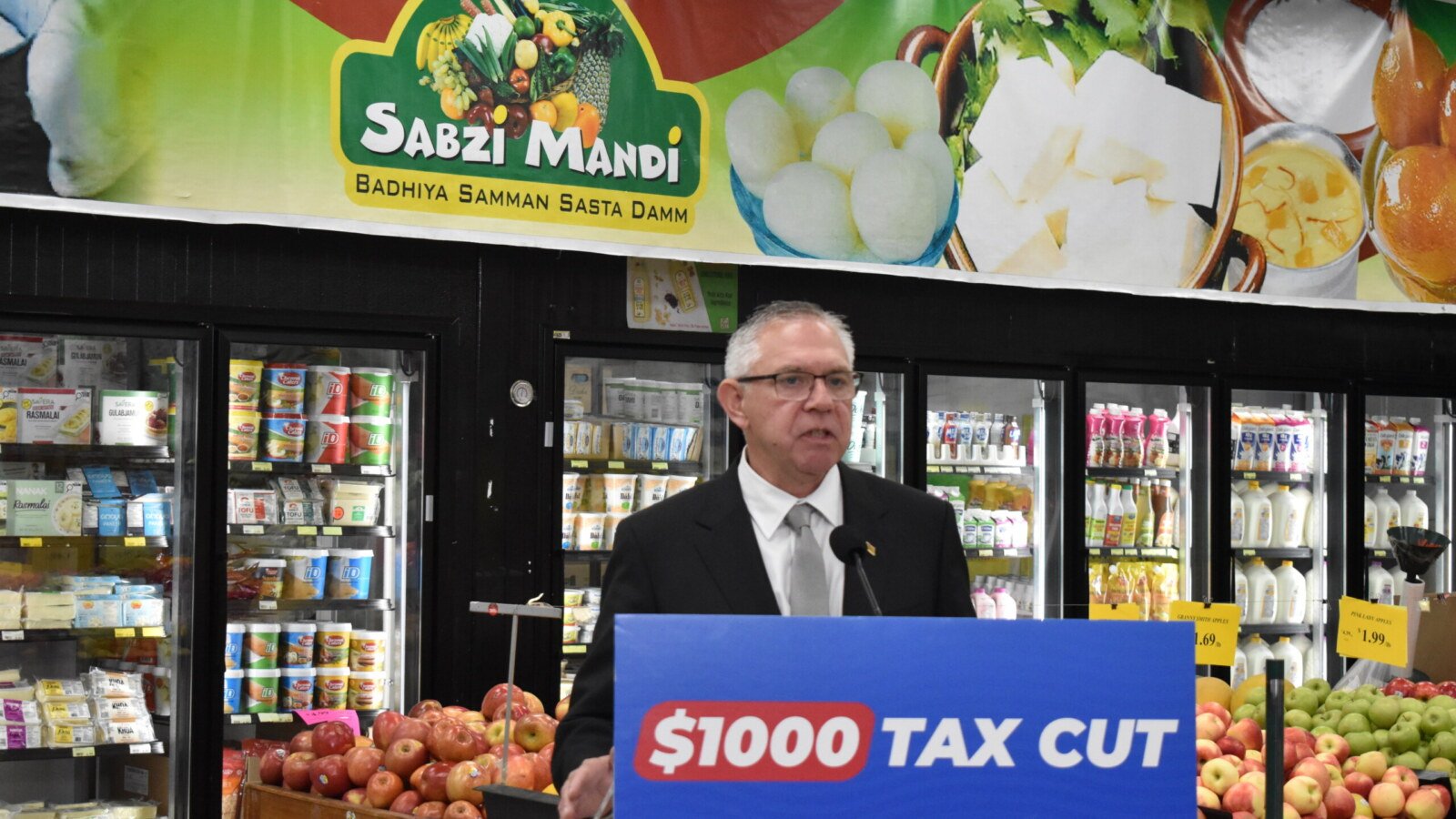
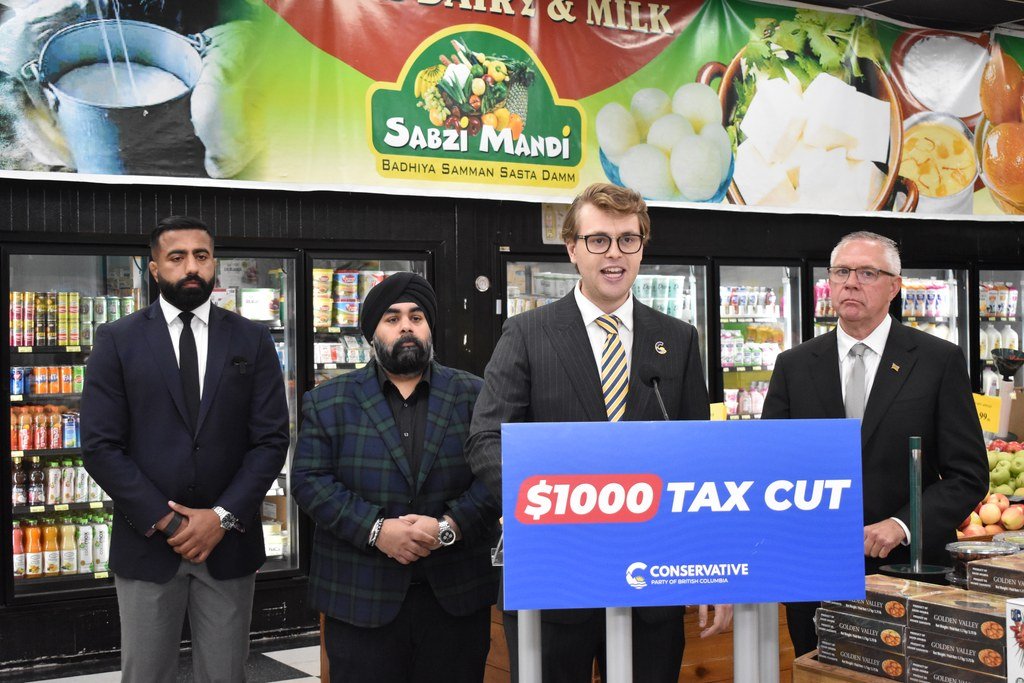
SURREY, B.C. — B.C. Conservative Leader Lorne Doerkson announced a proposed $1,000 annual provincial income-tax cut Thursday, promising that a Conservative government would raise British Columbia’s basic personal exemption to $32,000.
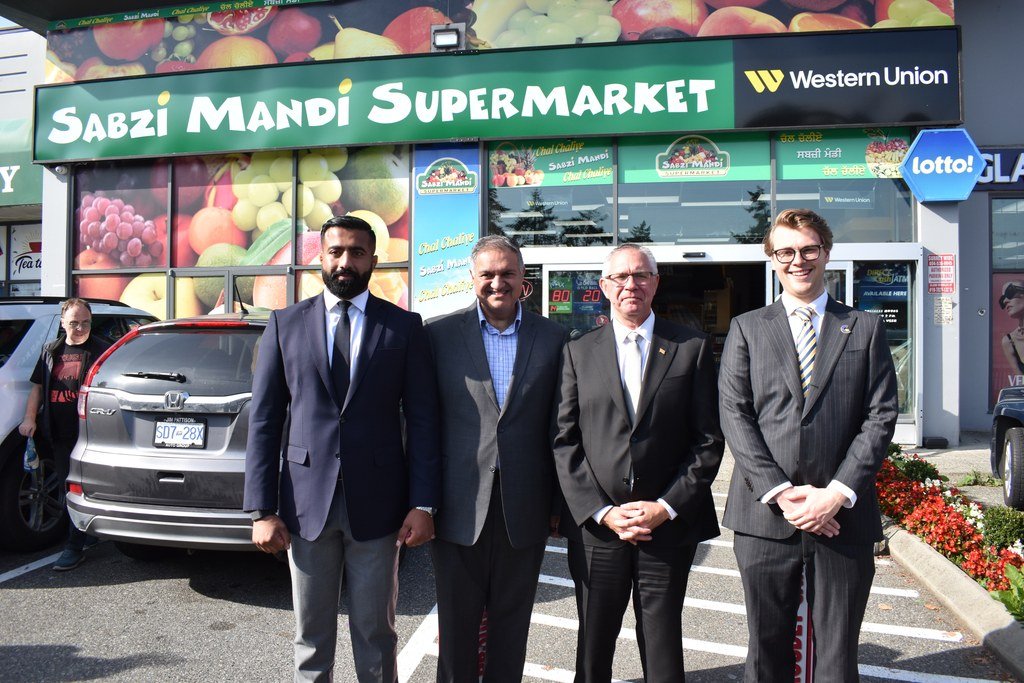
The announcement was made at Sabzi Mandi supermarket in Surrey as the Conservatives campaigned on affordability, lower taxes and economic growth ahead of the Oct. 24 provincial election.
Under the proposal, British Columbians would pay no provincial income tax on their first $32,000 of earnings, compared with the current basic personal exemption of $13,216.
The Conservatives say the change would provide up to $1,000 a year in tax relief for an individual and approximately $2,000 for a typical two-income household. The party estimates that the measure would leave a typical couple with about $167 more per month.
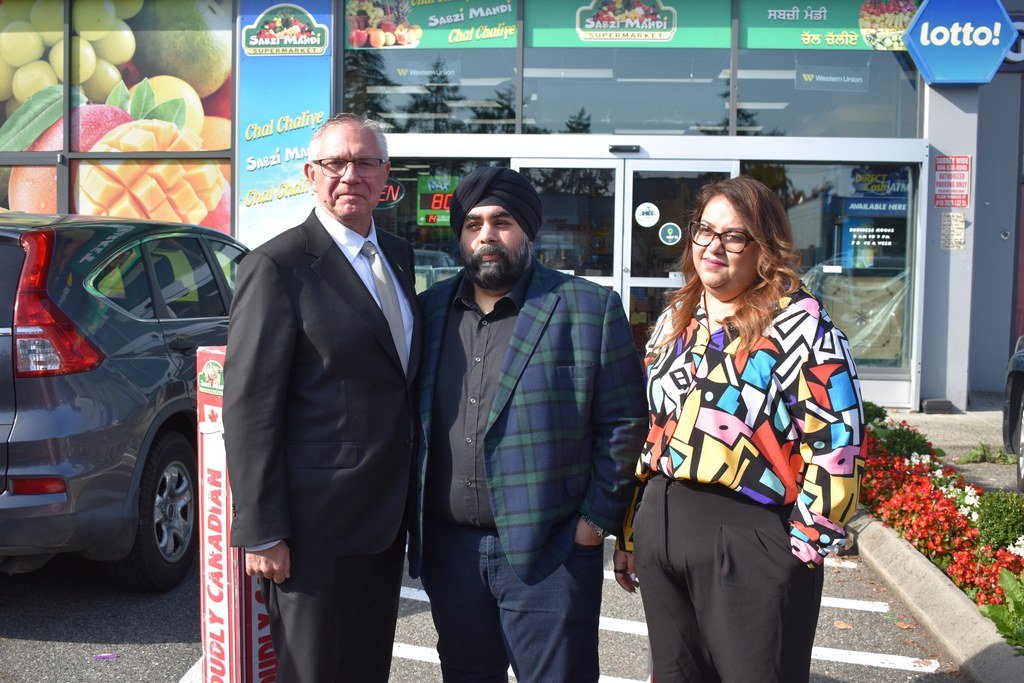
The proposal was formally announced by Doerkson after remarks from Conservative candidates and the owner of the Surrey supermarket hosting the event. The party says the measure is intended to provide immediate affordability relief while making B.C. more competitive.
Doerkson says British Columbians need tax relief
Doerkson argued that British Columbians are struggling with the cost of groceries, gasoline, housing and other necessities.
He criticized the NDP government’s tax policies and said his government would take a different approach by allowing residents to retain more of their income.
“The money is yours. You earned it. You deserve to spend it on the things that you need,” Doerkson said during the announcement.
The Conservative Party says the tax cut would apply to nearly every working British Columbian, with people earning more than approximately $40,000 receiving the full $1,000 benefit.
Doerkson also said a full-time worker earning minimum wage would not have to pay provincial income tax under the proposed exemption.
For seniors and families facing higher household expenses, he said the additional money could be used for groceries, gasoline, rent or mortgage costs.
Carson Binda and Jessy Sohota speak about affordability
The event began with remarks from Aman Narula, owner and managing director of Sabzi Mandi.
Narula said the company has 15 stores across British Columbia and employs more than 200 people. He described the business as a Canadian success story and said the company hears regularly from customers and employees concerned about affordability.
Carson Binda, the Conservative candidate for Vancouver-Coastal and a former B.C. director of the Canadian Taxpayers Federation, then criticized the NDP government’s tax policies.
Bradley argued that the province’s lowest income-tax bracket had been increased earlier this year despite previous promises to focus tax increases on higher-income earners.
He also criticized the government’s decision to freeze tax-bracket indexing through 2030, describing the resulting effect as “bracket creep.”
Jessy Sohota, the Conservative candidate for Surrey-Serpentine River, focused on the impact of affordability pressures on local families.
Sohota said he has spoken with young couples who work full-time but remain unable to afford a first home, parents who struggle with grocery bills and workers facing high gasoline costs.
He said those residents want to keep more of the money they earn rather than receive government assistance.
How will Conservatives pay for the tax cut?
The announcement was followed by questions about the fiscal impact of the proposal.
Global News reporter Ben O’Hara-Byrne asked Doerkson how a Conservative government would pay for the income-tax reduction, noting that his preliminary calculation put the impact at approximately $2.5 billion annually.
Doerkson said the Conservatives intend to grow the provincial economy rather than rely on continually increasing taxes.
He pointed to job losses and challenges facing industries across British Columbia and said economic growth would be the source of additional government revenue.
“We have to supercharge the economy in British Columbia and get things going because that is our revenue,” Doerkson said.
He identified LNG, forestry and mining as areas where he believes the province can expand economic activity. He also cited permitting and investment barriers as issues his government would seek to address.
Red FM asks how the deficit will be balanced
Parteek Mahal, Senior Reporter, then directly questioned Doerkson about the province’s deficit.
Mahal asked how the Conservatives would balance the books while simultaneously providing a major income-tax reduction and whether public services could be affected.
Doerkson said his government would seek to generate revenue through economic growth while maintaining frontline services.
“We are absolutely committed to keeping those frontline services intact and improving on them,” he said.
Doerkson again pointed to LNG, forestry and mining, as well as infrastructure and other economic sectors.
He also highlighted British Columbia’s alcohol industry, describing it as a $3.5-billion industry employing approximately 20,000 people, and said the Conservatives see opportunities for further economic growth.
The Conservatives did not provide a detailed fiscal costing at the event showing exactly how the full cost of the proposed tax reduction would be offset.
Doerkson questioned about ICBC
ICBC was another major topic during the media question period.
Daniel Perianu of Sitka Media asked Doerkson about a letter concerning ICBC that had become a political issue during the campaign.
Doerkson rejected the characterization that the letter was intended to be private or secret, saying he understood that communications sent to thousands of people could become public.
He said ICBC faces serious challenges and argued that people who have suffered catastrophic injuries need adequate support from the insurance system.
Doerkson said a Conservative government would seek to maintain affordable insurance while improving support for people whose lives have been significantly affected by serious accidents.
Global News’ Ben O’Hara-Byrne also asked Doerkson what he meant when he previously said “everything is on the table” regarding ICBC.
Doerkson said the system has to provide affordable insurance while also ensuring people who suffer serious injuries receive appropriate support.
He cited conversations with families who, he said, had received insufficient support following catastrophic injuries.
CTV questions Conservative candidate Joachim Agou
CTV News reporter Rob Buffam also questioned Doerkson about Conservative candidate Joachim Agou, following allegations concerning historical social-media posts.
Doerkson initially said he had not seen the posts and was not aware of the allegations in detail.
He said he would investigate the matter after leaving the press conference.
Later, CBC News reporter Amelia John pressed Doerkson further about allegations involving comments concerning the Pakistani community, protesters and white supremacist politicians.
Doerkson said he would not support such comments.
He again said he had not personally reviewed the posts at that point and would look into the allegations.
Doerkson also challenged Premier David Eby over standards he said should apply equally to candidates across political parties.
Conservatives frame tax cut as broader economic plan
The Conservatives are presenting the tax proposal as part of a broader economic platform focused on reducing taxes, encouraging investment and cutting regulatory barriers.
The party’s backgrounder argues that British Columbians are facing increasing financial pressure and says its proposed tax exemption would provide immediate relief.
The party is also criticizing the NDP’s recently announced tax changes affecting high-income earners and professionals, arguing that higher taxes could make it harder for B.C. to attract and retain skilled workers.
The NDP has defended its tax approach as a way to raise revenue for public services, particularly health care.
What remains unanswered
While Doerkson provided several areas where a Conservative government would seek economic growth, the press conference did not provide a complete fiscal plan detailing the annual cost of the $1,000 tax cut, specific spending reductions or the precise amount of new revenue expected from economic growth.
The Conservatives’ central argument is that stronger economic activity would expand the province’s revenue base while allowing government to reduce reliance on taxation.
Doerkson said the tax cut would be an immediate priority if his party forms government.
“BC deserves serious leadership and real change,” he said. “It is time for a government that fights for its workers, stands up for families, and lets you keep more of the money you earn.”
The proposal would require a Conservative government to implement the change through the provincial tax system.
British Columbians vote in the provincial election on Oct. 24.
StudioX News will continue to follow the 2026 B.C. election, including party platforms, campaign announcements and questions surrounding how the major promises would be funded.

Harnaik Singh Rathor is the Founder, Publisher, and Editor-in-Chief of StudioX News Canada, Canada's multilingual digital news network serving diaspora communities across 44 languages. With a background in media production, public relations, and multicultural communications, he founded StudioX Film and TV Corporation to bridge the gap between mainstream Canadian media and the country's diverse immigrant communities. He is a member of the Canadian Association of Journalists (CAJ), RTDNA Canada, CPRS Vancouver, NEPMCC, and the Canadian Freelance Union (Unifor). Based in Surrey, British Columbia. | LinkedIn: https://www.linkedin.com/in/harnaiksinghrathor/ | Muck Rack: https://muckrack.com/harnaiksinghrathor | Email: editor@studioxnews.ca