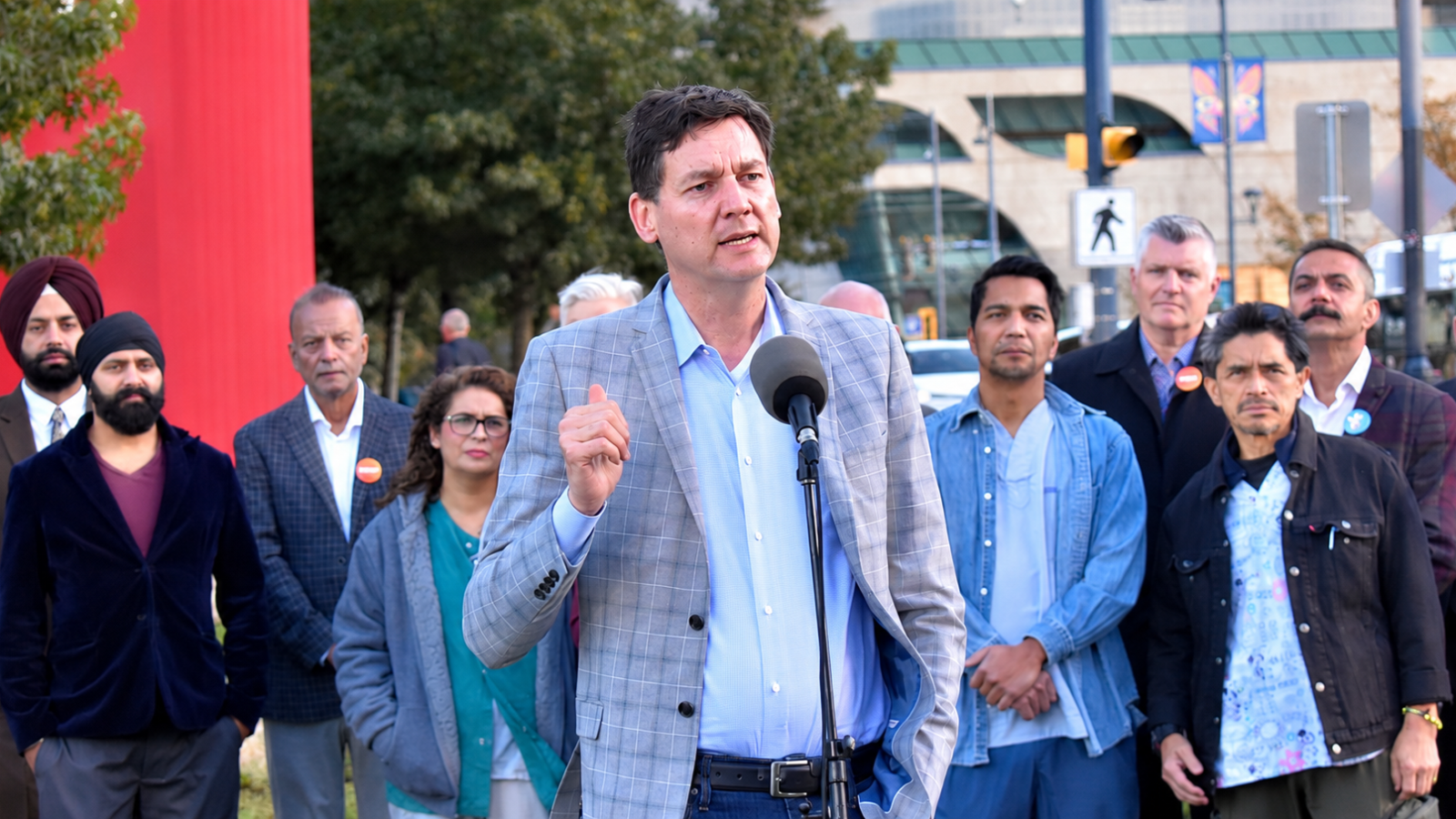
SURREY, B.C. — BC NDP Leader David Eby used a Surrey campaign appearance on Friday to highlight healthcare staffing, medical training and hospital construction, promising further action to improve access to family doctors as British Columbia heads toward its October 24 provincial election.
The October 9 event focused on healthcare commitments, including 20 additional team-based primary care clinics, expanded same-day appointments and a proposed accelerated training pathway for qualified international medical graduates already living in B.C.
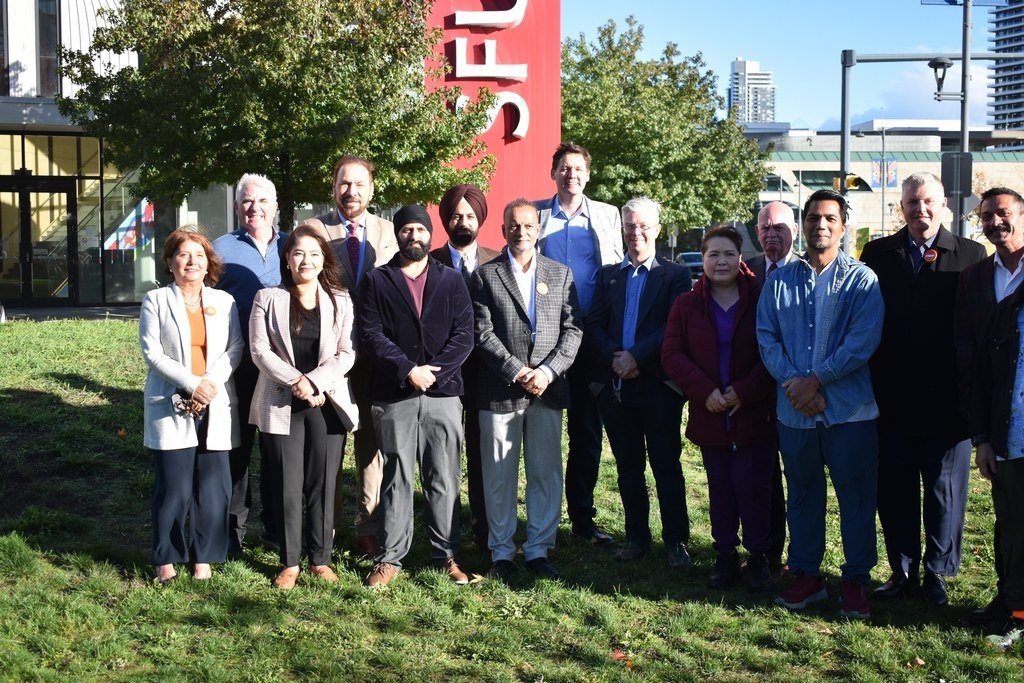
StudioX News attended the press conference and asked Eby a question. The event also featured claims about hospital investments, healthcare recruitment and the potential consequences of the BC Conservatives’ proposed tax changes.
New Surrey hospital project remains a major healthcare priority
One of the key projects discussed was the new Surrey Hospital and BC Cancer Centre, which is under construction.
Provincial project documentation identifies the facility as a major integrated hospital and cancer centre, with inpatient beds, operating rooms, diagnostic services and dedicated cancer-treatment facilities. The project has a budget of approximately $2.88 billion, funded primarily by the provincial government, with contributions from the BC Cancer Foundation and Surrey Hospitals Foundation.
The province’s published project information anticipates construction completion in late 2029 and the opening of services to patients in 2030. This distinction matters because completing construction does not necessarily mean the facility will immediately begin treating patients.
The hospital is expected to expand healthcare capacity in one of British Columbia’s fastest-growing communities, where demand for emergency services, specialist care and diagnostic testing continues to place pressure on existing facilities.
The press conference also referenced a 110-bed emergency department. However, the publicly available project description lists 55 emergency-department treatment spaces. The figures describe potentially different measures and should not be treated as interchangeable without further clarification.
NDP promises more family doctors and faster access to care
Eby outlined plans to expand primary care, including 20 additional team-based clinics and incentives intended to encourage same-day appointments and evening and weekend services.
The party also promised an accelerated “bridging to practice” program for qualified international medical graduates who are already living in B.C. but cannot enter family medicine because of limited residency positions.
The proposed program would aim to help eligible graduates move toward practising family medicine. Its practical impact will depend on eligibility requirements, training capacity, licensing and implementation details.
The NDP additionally pledged 1,000 more training seats for nurses, nurse practitioners, allied health professionals and care aides, including a 20% increase in nursing seats. For rural and underserved communities, it proposed discounted tuition, loan forgiveness and moving expenses to attract healthcare workers.
These are election commitments. Their delivery would depend on the government’s implementation plans, funding and ability to recruit and retain staff.
What provincial figures say about family-doctor access
The NDP’s claims about healthcare progress can be compared with figures published by the provincial government.
Government reporting states that one million additional people have been connected with a family doctor or nurse practitioner since 2018. Approximately 4.47 million people, or 80% of B.C.’s population, had a primary care provider in the reported figures. The province also reported that more than 4,000 people were being matched with providers each week.
The government reported that the number of family doctors practising in longitudinal primary care had increased from 4,362 in 2018 to 5,807 by March 2026. The number of nurse practitioners had also more than tripled since 2018.
These figures indicate progress in connecting patients to primary care, but they do not establish that every resident has a provider or that every patient can obtain an appointment quickly.
The NDP’s promise to ensure everyone who wants a family doctor or nurse practitioner has one by the end of next year therefore remains a future commitment, rather than a completed outcome.
Medical school and workforce recruitment
The Surrey appearance also highlighted Simon Fraser University’s new medical school, which welcomed its first class of 48 students in 2026.
The school is intended to contribute to the future healthcare workforce, although medical education and residency training take time before graduates can independently practise.
The province has also reported progress in recruiting internationally trained professionals. As of July 2026, more than 6,000 internationally trained doctors were licensed in B.C., according to provincial figures. Licensing, however, does not automatically mean that every doctor is practising in family medicine or accepting new patients.
The proposed bridging program is intended to address one part of the workforce challenge by creating another pathway for qualified international graduates seeking to enter family medicine.
Dispute over healthcare spending and Conservative tax proposals
Healthcare funding became another point of political disagreement during the campaign.
In its October 9 press release, the BC NDP argued that the BC Conservatives’ proposed income-tax reductions could create an annual revenue shortfall of approximately $3 billion and put public services at risk. The party compared that amount with the estimated cost of employing more than 8,000 doctors.
Those figures are the NDP’s fiscal claims and should not be treated as independently verified estimates without a detailed analysis of the Conservative proposal, its projected revenue effects and the assumptions used.
The BC Conservatives’ October 8 announcement promised to reduce provincial income taxes by approximately $1,000 annually for nearly every working British Columbian and $2,000 for an average couple. The party said the changes would provide relief from the cost of living.
A separate Conservative healthcare announcement said the party would maintain current government healthcare spending while recruiting more doctors and nurses and seeking to keep emergency rooms open.
The competing statements raise questions about how the parties would fund their respective commitments, account for the revenue effects of tax changes and manage healthcare operating and capital spending.
Claims that the Conservative plan would cut healthcare spending by $4.1 billion or reduce hospital capital projects by $1 billion require separate supporting documentation. Those amounts were not established by the original NDP press release or the Conservative tax announcement reviewed for this report.
What voters should watch before October 24
For Surrey residents, the election debate extends beyond the number of announcements made by each party. The important questions include when new healthcare facilities will open, whether the system can recruit enough staff, how many additional patients will gain access to family doctors and how each party intends to pay for its proposals.
The new Surrey Hospital and BC Cancer Centre represents a major infrastructure investment already under construction. Other commitments discussed at the press conference, including additional primary care clinics, training seats and the international medical graduate pathway, will require further implementation details to assess their likely impact.
As the election approaches, voters can compare the parties’ healthcare promises against published government data, project timelines and the fiscal plans each party provides.

Harnaik Singh Rathor is the Founder, Publisher, and Editor-in-Chief of StudioX News Canada, Canada's multilingual digital news network serving diaspora communities across 44 languages. With a background in media production, public relations, and multicultural communications, he founded StudioX Film and TV Corporation to bridge the gap between mainstream Canadian media and the country's diverse immigrant communities. He is a member of the Canadian Association of Journalists (CAJ), RTDNA Canada, CPRS Vancouver, NEPMCC, and the Canadian Freelance Union (Unifor). Based in Surrey, British Columbia. | LinkedIn: https://www.linkedin.com/in/harnaiksinghrathor/ | Muck Rack: https://muckrack.com/harnaiksinghrathor | Email: editor@studioxnews.ca