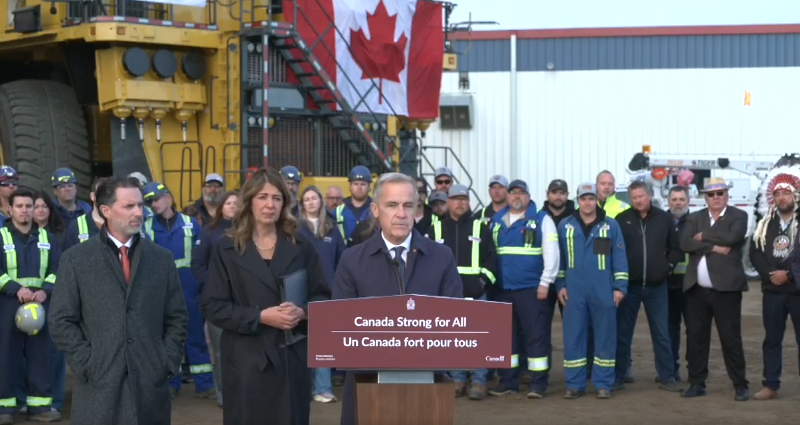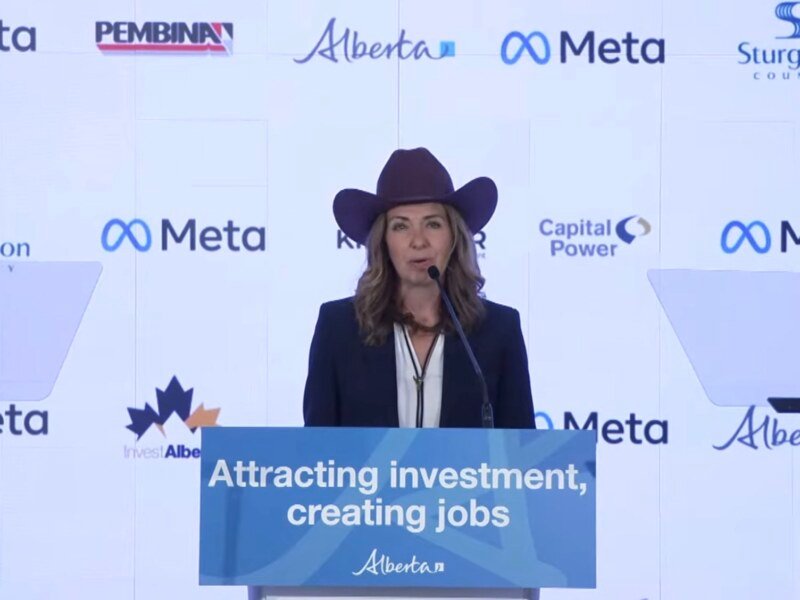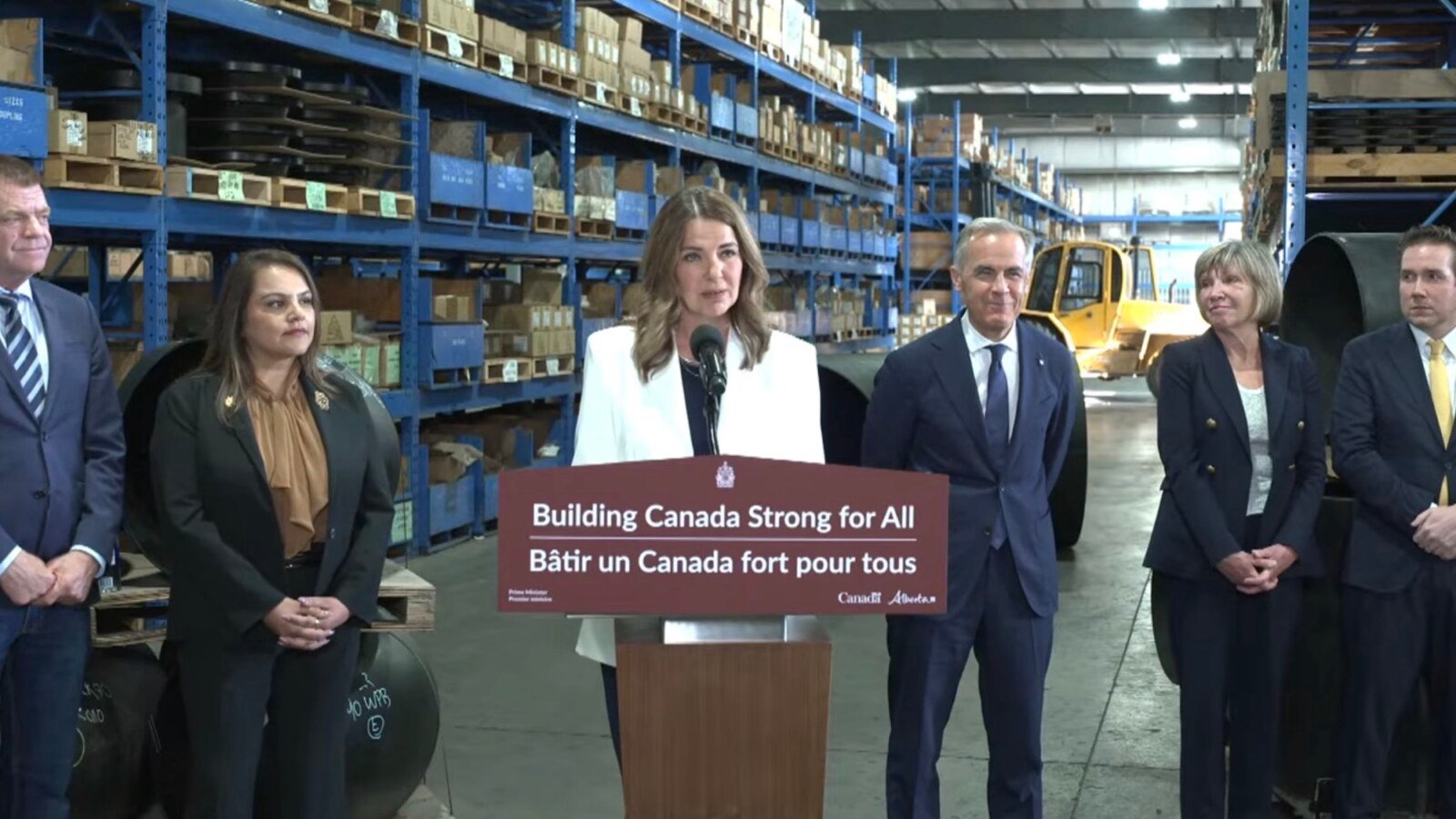
A proposed million-barrel-a-day pipeline from Alberta to the B.C. coast cleared its first federal gate on Thursday — aimed squarely at oil buyers in Japan, Korea, China and India. B.C. dropped the threat of a court fight, and Indigenous co-ownership is now on the table.
Alberta submitted its application for a new West Coast Oil Pipeline to the federal Major Projects Office on Thursday, and Ottawa moved the same day to fast-track it — a coordinated push to open a direct oil route from the Prairies to Asian markets.
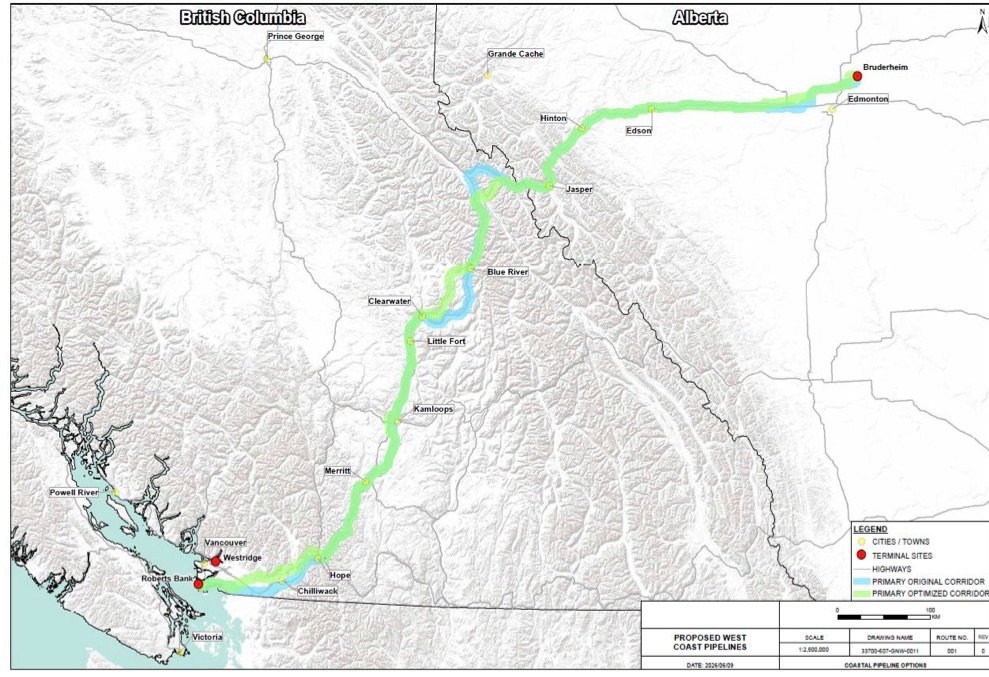
Map of Original Corridor and Optimized Corridor to Roberts Bank.
The proposed line would carry more than one million barrels of crude per day from Bruderheim, Alberta, to a deep-water tanker terminal on B.C.’s southwest coast, largely following the existing Trans Mountain corridor. Alberta says the southern route is the fastest, lowest-cost option and avoids triggering the federal North Coast tanker ban.
Prime Minister Mark Carney referred the proposal to the Major Projects Office, which will now decide whether to list it as a “project of national interest” under the Building Canada Act by October 1, 2026. That designation would put the project through a streamlined federal review. If it clears, construction could begin as early as September 1, 2027.
B.C. steps back from a court fight
The biggest shift on Thursday came from Victoria. B.C. Premier David Eby — a longtime critic of being sidelined in pipeline talks — said his government would not challenge the project in court. “We will not be going to court to fight a pipeline project,” Eby said in Vancouver, adding B.C. would meet its constitutional obligations in good faith.
In exchange, the federal government committed billions in support for B.C. projects and guaranteed that oil tanker restrictions on B.C.’s north coast will stay in place. The proposed route deliberately avoids that protected north coast, running to the southwest instead.
Why this matters for diaspora communities in Canada
The export target is the clearest diaspora angle. Alberta and Ottawa both name fast-growing Asian economies — Japan, Korea, China and India — as the markets this pipeline is built to reach. For hundreds of thousands of Canadians with roots in those countries, this is a direct line between Canadian resources and home-country economies.
The jobs impact lands close to home too. Federal figures put peak construction employment at roughly 140,000 jobs; Alberta frames it as “tens of thousands,” plus work across manufacturing, engineering, transport and services. Much of the build — and the coastal terminal — would sit in British Columbia, where a large share of the country’s South Asian, Chinese, Filipino and other diaspora communities live and work.
Indigenous equity and a carbon-capture condition
Both governments say Indigenous co-ownership is central, not an afterthought. Ottawa says a “meaningful equity stake” is reserved for Indigenous Peoples, and consultations through the Major Projects Office begin immediately. Alberta is routing support through the Alberta Indigenous Opportunities Corporation and the federal Indigenous Loan Guarantee Program.
Not all Indigenous voices are on board. Environmental advocates in Alberta have questioned whether the plan fully accounts for freshwater use, tailings cleanup and health costs — a reminder that “consultation” and “consent” are not settled yet.
The pipeline is also tied to Pathways, billed as the world’s largest carbon-capture project, expected to cut about 16 million tonnes of emissions a year from participating oilsands operations. Ottawa has made clear the pipeline does not proceed without it. Alberta Premier Danielle Smith framed the day around national ambition: “Canada has everything it needs to become an energy superpower.”
The ownership question
For months, the open question was who would actually build and pay for it. Thursday brought partial answers: an ownership group of Trans Mountain Corporation, the Alberta Petroleum Marketing Commission and Pembina Pipeline will form a new jointly owned company, with Trans Mountain leading development and Pembina as the private-sector investor. Canada and Alberta will hold equal partnership stakes.
What happens next
- By Oct. 1, 2026: federal decision on national-interest listing.
- Immediately: Major Projects Office begins consultations with Indigenous groups, provinces and territories, including continued talks with B.C.
- Coming days: Alberta, Ottawa and the Oil Sands Alliance expected to release details of a tripartite production-and-Pathways agreement.
- As early as Sept. 1, 2027: possible start of design and construction, if conditions and consultation obligations are met.
Oil is not expected to flow until the early 2030s.

Harnaik Singh Rathor is the Founder, Publisher, and Editor-in-Chief of StudioX News Canada, Canada's multilingual digital news network serving diaspora communities across 44 languages. With a background in media production, public relations, and multicultural communications, he founded StudioX Film and TV Corporation to bridge the gap between mainstream Canadian media and the country's diverse immigrant communities. He is a member of the Canadian Association of Journalists (CAJ), RTDNA Canada, CPRS Vancouver, NEPMCC, and the Canadian Freelance Union (Unifor). Based in Surrey, British Columbia. | LinkedIn: https://www.linkedin.com/in/harnaiksinghrathor/ | Muck Rack: https://muckrack.com/harnaiksinghrathor | Email: editor@studioxnews.ca